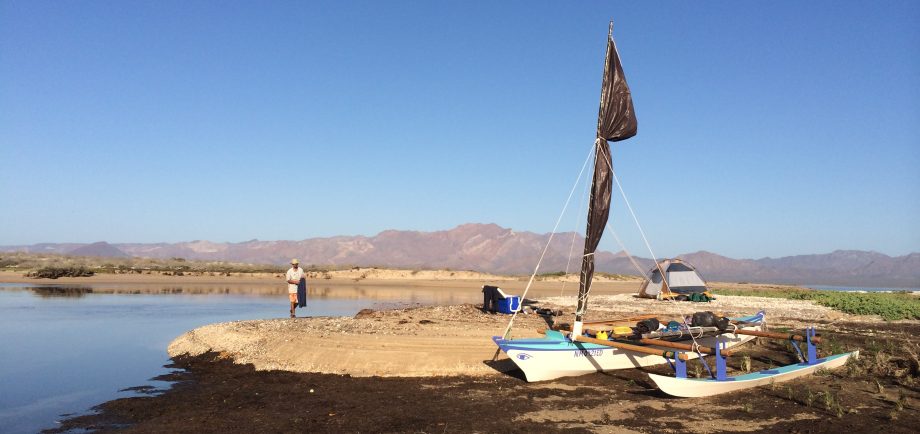
For many, the idea of living on a small boat creates a sense of romantic freedom —get yourself untethered from the grind of a “normal” life and the confines of traditional housing.
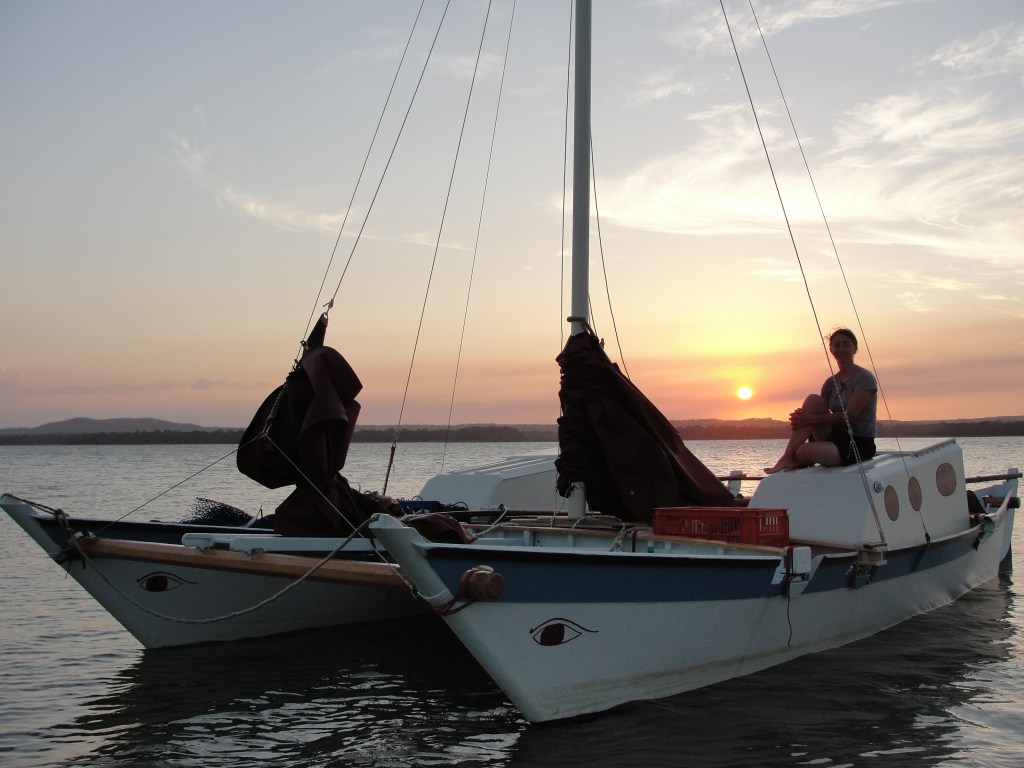
It’s about wind in your hair, living on the water, waking to a different backyard, and chasing that horizon. Beyond the idyllic daydreams however, there are real, practical, and even transformative reasons why people choose to live afloat, especially on small boats.
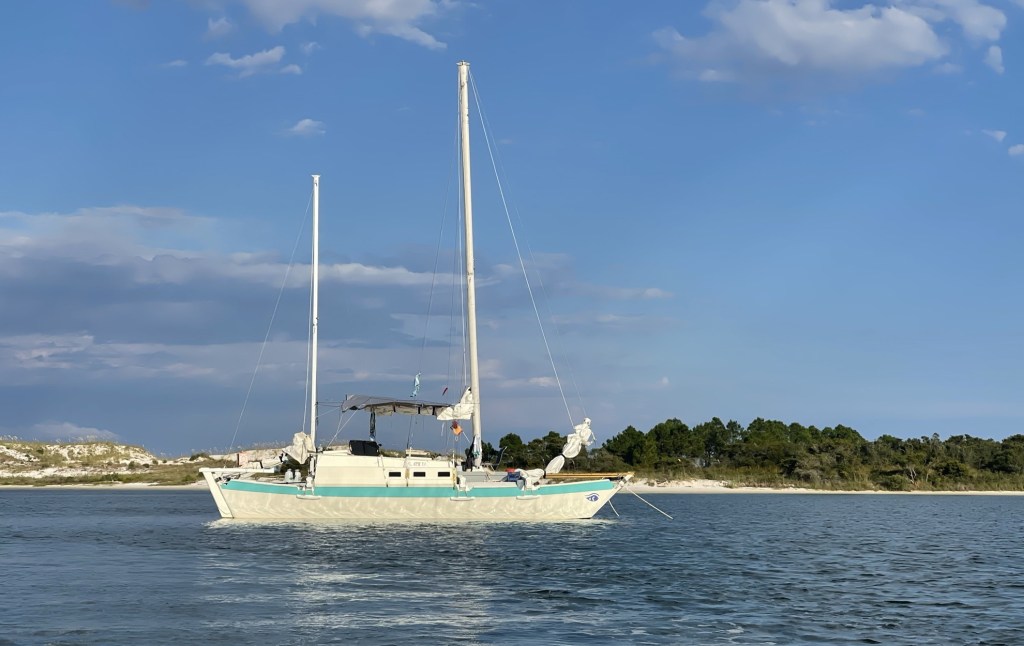
Now of course, ‘small boat’ is a relative term. I’m referencing boats in the 30’ – 45’ range. Huge to some people, barely adequate for others. For me this is a size range within which I can live comfortably, especially as it’s a Wharram catamaran. Big open decks, and with few concessions, they’re very simple. My main berth, in the Starboard hull where I sleep, is somewhere between a double and queen size bed. The main cooking galley in the Port hull is a reasonably sized “U” shape with a small 12 volt freezer and a two burner camping stove. The rest is for storage and workshop type areas. Upstairs on deck it’s all open, kind of like living on a big back porch.
This lifestyle isn’t just for the classic salty old sailors or globe-trotting adventurers. It’s a growing movement amongst people seeking simplicity, adventure, and a more intentional way of living. Whether anchored in a quiet coastal bayou or island-hopping through tropical waters, the live-aboard life has a rhythm all its own. Let’s dive into what I think are seven compelling reasons why life on a small boat might be the best decision you could ever make.
The number one reason many people choose to live on a small boat is simple: freedom. When your home floats and moves, the whole world becomes your backyard. You’re not tied to a piece of land, a lease agreement, or a neighborhood with a PIA-HOA. If you don’t like your view, your neighbors, or even the weather, you can weigh anchor and move. While I’ve remained in the same basic district for a while now, I often move my anchor around a half dozen or so places, all within a 15 mile radius. Although I must admit to spending more time in one particular bayou than others simply because it’s a hidden gem and almost impossible to see from the open bay areas. Only locals really know it for its protected waters, and most importantly the half dozen houses at one end are mostly holiday investment properties so they’re occupied infrequently, barely at all through winter.
1.
Freedom of Movement
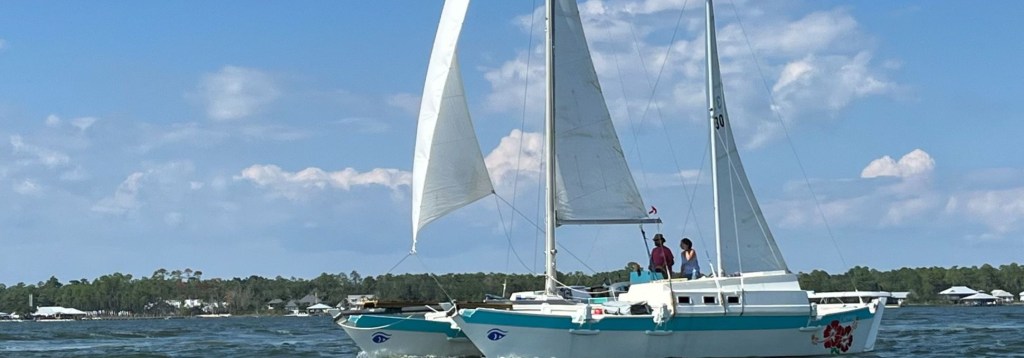
The mobility offered by a boat provides a unique sense of empowerment. Want to explore hidden coves, waterfront towns, or tropical islands? No problem. Your home goes with you.
It seems most head to a particular destination to drop anchor, or beach up for the day. I love being miles from any shoreline and simply stopping, drop the sails and just let the boat drift for a couple of hours. I don’t think people do this often enough, fishermen probably do, but not so much everyone else.
You can wake up in one place and, with the right wind and tide, or with engine power, fall asleep in another. It’s not just travel — it’s travel on your own terms. Freedom of movement also means you’re in control of your pace. You can chase adventure or find a sheltered calm watered haven. You can seek others to be in a group with, or just enjoy some solitude. Some boaters enjoy hopping from marina to marina, while others anchor out for weeks in total isolation. The choice is yours to make in accordance with your mood of the day.
There’s also the freedom from mortgages, property taxes, and often, the expectations of mainstream society. Don’t get me wrong you’ll be judged seven ways to Sunday, some will be envious, some will be pissy because your ’doing it’ and they’re not, but most will appreciate seeing someone living the dream as they imagine themselves in your shoes.
Living on a boat lets you define your own version of success, one that values experience and presence over square footage and possessions.
2.
Living Simply and Minimally
A small boat forces you to pare life down to the essentials. Storage is limited and space is tight. You can’t bring everything with you — and that’s exactly the point. Boat life naturally leads you toward minimalism, and in doing so, helps you escape the clutter, the consumerism, and the chaos of modern life. Whenever I head into town to do the necessary shopping, the hustle and bustle of ‘normal’ life seems extreme to me. Impatience and frustration is written on many of the faces I see and I cannot wait to get back back to the boat. There’s probably some pathological issue at play here that I should talk to a professional about, but I’ll leave that to a later date.

At first, the adjustment can feel extreme. Downsizing your life into a 35-foot sailboat or trawler style boat requires serious choices. But it doesn’t take long to realize how little is actually needed. Minimal clothing, tools for maintenance and repair, a basic galley for cooking, and you’re good to go.
A really important feature though, is to make sure you have a hobby or interest to pursue. Whether it’s fishing, writing, or knitting, have something to lose time playing with. It’s very easy to sit and do nothing, and to get used to that. At least it is for me, especially with tablets and phones that can vacuum our intellect via doom scrolling. I have lost hours upon hours with zero outgoing intellectual stimulation. It’s all incoming, algorithmic based gibberish doing nothing for the imagination, we get the cerebral buzz without effort. To me it’s like watching sport, you can feel the passion and intensity, but it does absolutely nothing for your own fitness.
Living this more simple, and exposed lifestyle can provide a certain clarity. With fewer things to clean, store, or organize, your mental load decreases. You spend less time maintaining your stuff and more time living your life, and this is where the hobbies come into play. You can imagine and create, then use or play with whatever that might be…and get satisfaction from it.
It’s also deeply economical. Minimalist living means buying less, consuming less, thereby wasting less. You learn to repair instead of replace, cook your meals instead of dining out, and when you do dine out it feels so much more like a treat. I tend to drink cheap beer when on board, probably more than I should, but then I treat myself to a nicer craft beer when I go ashore. It’s a only small thing, but it does feel significant. I tend to find more joy in the small, quiet moments and infrequent interactions. There’s freedom in owning less — especially when you’re surrounded by everything you need: water, sky, wind, and most importantly time.
3.
Deep Connection with Nature
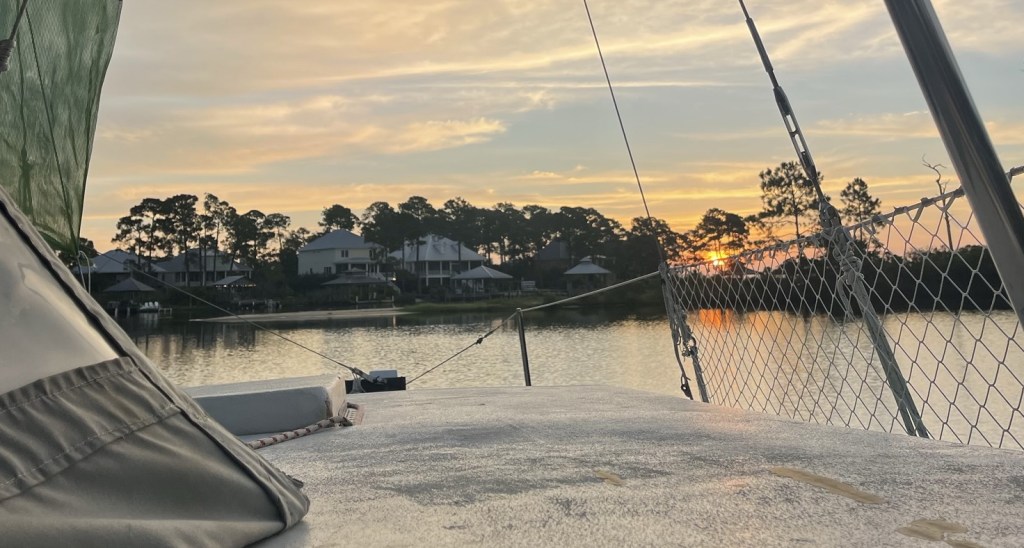
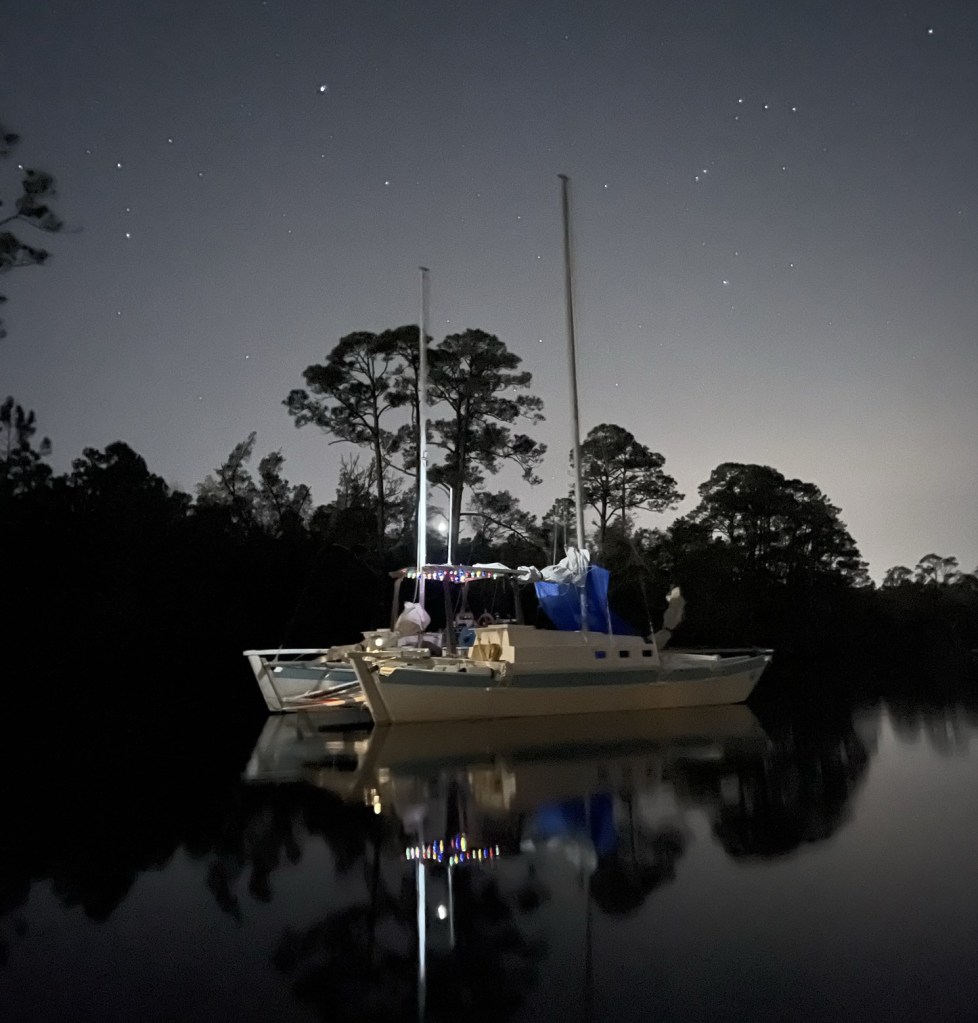
You don’t just watch sunsets from a balcony any more, you exist within them, feeling the world change around you as the shadows lengthen and colors get deeper and more dramatic. You wake up to the sound of the world waking up, and you fall asleep as world settles in for the night. After the sun has set, a sky full of stars appears, or lightning flashes in distant thunder heads, and you feel how life on the water is intimately tied to the natural world.
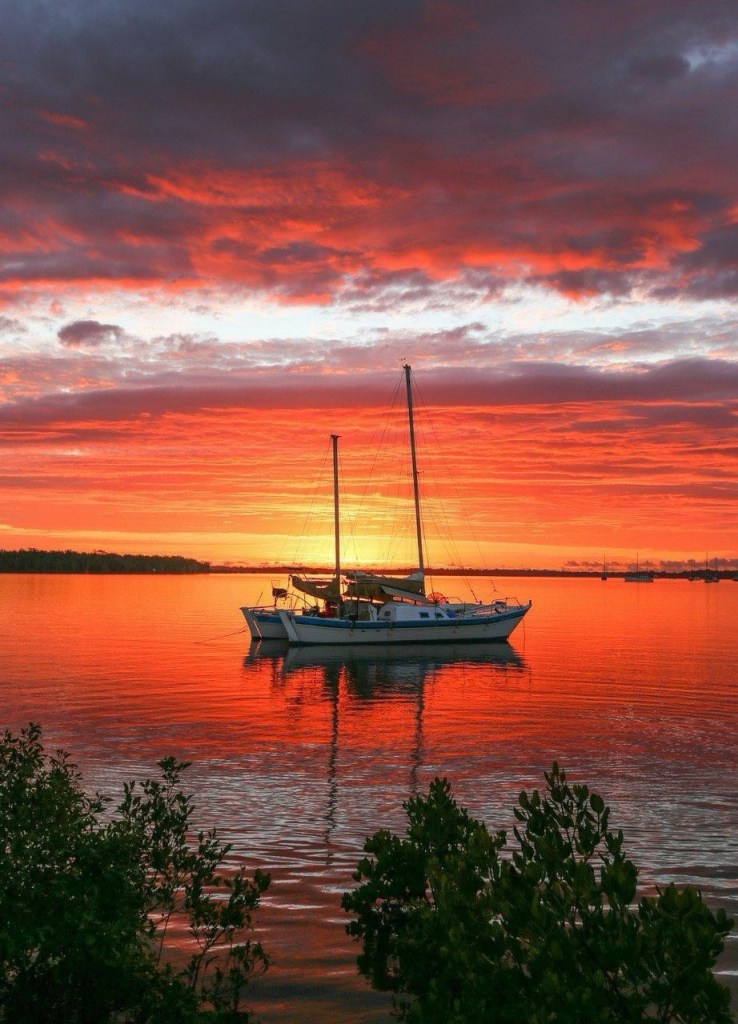
You become acutely aware of the moon phases, the tidal movements, and the way the wind shifts before a storm front comes through. Especially if a weather change is expected to come through overnight, it’s nice to be protected from stronger winds and waves by a shoreline when you wake up. Weather isn’t just a small talk topic anymore — it’s a significant factor in every decision you make. You learn to read clouds, track barometric pressure, and respect the moods of the world around you.
This awareness fosters a deep connection to the planet. It’s not uncommon for those who live aboard to speak about developing a new appreciation for natural rhythms and a reverence for the environment. You start using your fresh water more carefully, relying on solar energy, and minimizing waste — partly because you have to, but it also makes sense when you live with nature, not just near it.
And the benefits go beyond the practical. Time spent in nature is restorative to your mind and soul. It can calm your nervous system, sharpen your senses, and reminds you of your place in the larger web of life. On a boat, every day is a front-row seat to the miracles of the natural world.
4.
Lower Cost of Living
One of the biggest myths about boat life is that it’s only for the wealthy. In truth, living on a small boat can be incredibly affordable, especially compared to the skyrocketing costs of rent and homeownership in many parts of the world.

Buying a boat outright can cost less than a down payment on a home. And once you own your boat, your overhead drops significantly. You don’t have property taxes or HOA fees, or rent. Marina fees are generally much cheaper than rent and if you’re anchored out, your housing costs might be zero.
Utility bills also shrink. Solar panels and batteries power lights and electronics. I don’t have a mains power hookup on Curious, if I need to use power tools I crank up the small generator, everything else is 12 volts.
Water use is minimal, and I try to harvest rain whenever possible. I carry 40 gallons in 8 Cornelius Kegs, and 20 gallons in 5 gallon buckets. I use Co2 to pressurize a keg for the water supply and a wonderful extra is that I shower off each night with sparkling carbonated water, and yes it does feel very groovy.
Heating and cooling are usually natural — plus you can often move with the seasons if you want to. The cabin is quite small so a camp style buddy heater, and 12 volt fans do the trick if it gets too much.
Of course, there are costs. Maintenance, insurance, and fuel costs aren’t negligible and if you own a car on shore you need to store and service that. But boats reward the handy and the resourceful. Many live-a-boards learn to do their own repairs and upkeep, saving thousands over time.
Most importantly, boat life shifts your spending priorities. You stop buying extraneous stuff and start buying time — time to explore, relax, create, or simply live more intentionally. That’s real value.
5.
Learning and Self-Reliance
Living on a small boat can be a crash course in self-reliance. Boats are their own ecosystem — floating machines that require constant care, attention, and understanding. You don’t need to be a master sailor or engineer to start, but you’ll become your own plumber, electrician, mechanic, and navigator. You’ll be amazed at what you actually can do. Especially in today’s world with “YouTube university” there’s not much that can’t be learned.

There’s something empowering about fixing your own engine, rigging and repairing your own sails, or troubleshooting a misbehaving ‘thing’ in the middle of nowhere. It’s hands-on living. Challenges become opportunities to learn, and every repair adds to your confidence.
This self-reliance extends beyond physical tasks. Emotionally and mentally, boat life requires independence. You may go days without seeing another person. You may face fear, boredom, or loneliness. But in confronting these feelings, you grow stronger, braver, and more grounded.
You also learn to adapt. When the weather shifts, when the tide turns, when plans unexpectedly change — you pivot. Like the saying goes… “You can’t control the wind, but you can adjust your sails.” Flexibility becomes second nature. You start expecting the unexpected and build resilience.
In the end, boat life teaches that you are capable — far more than you probably believed. And that belief translates into every other part of your life. There’s nothing so reassuring than believing that no matter what happens, you can deal with it.
6.
A Simpler, Slower Pace of Life
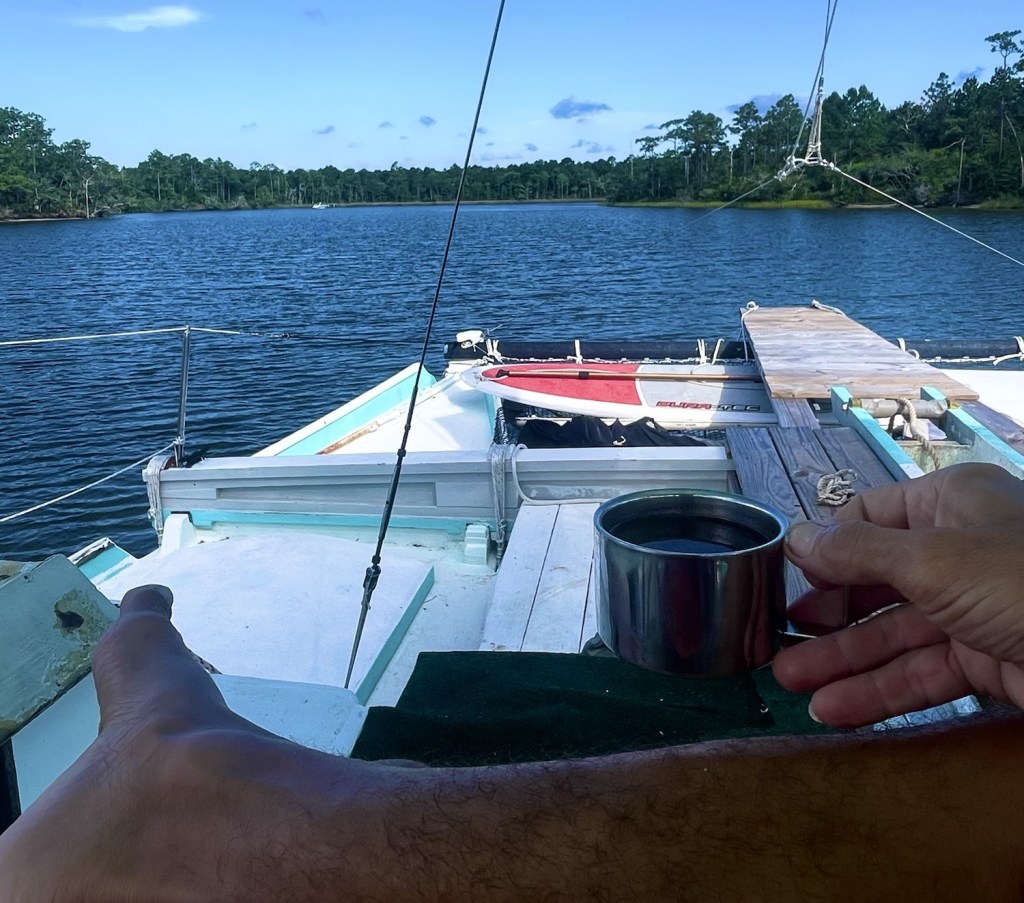
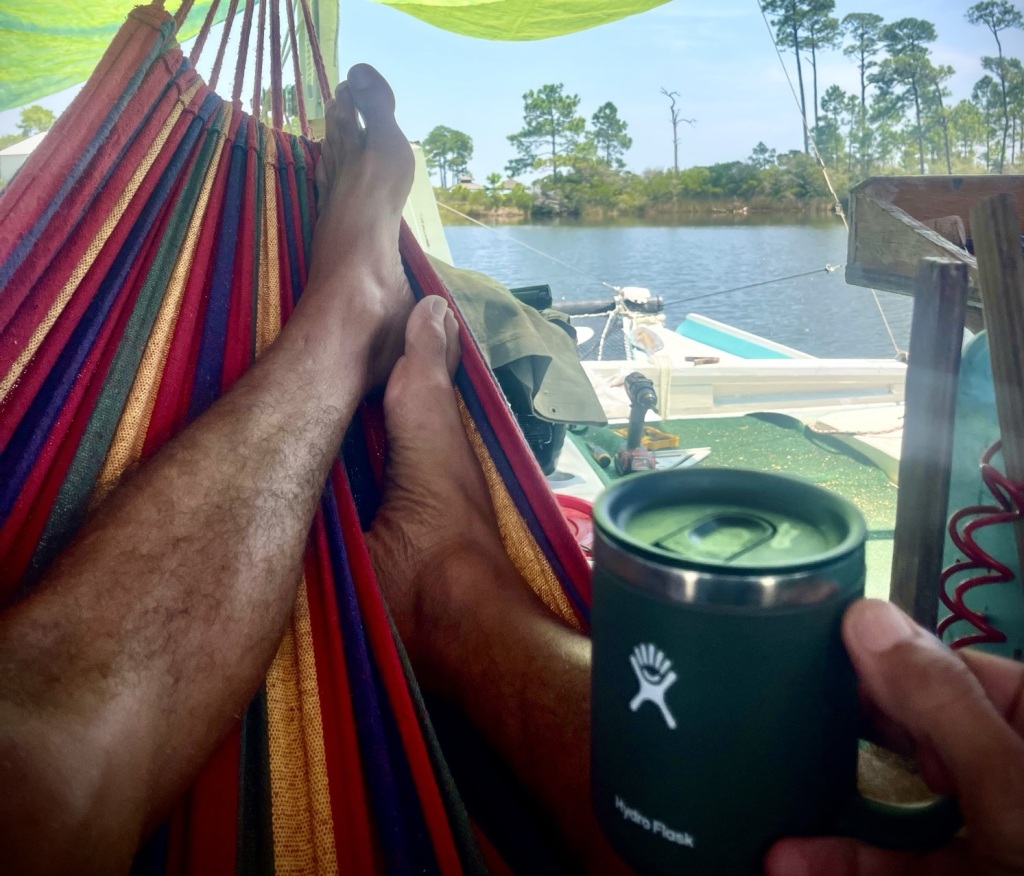
In our fast-paced, always-connected world, boat life slows you down — take that as a gift. Tasks that are automated or instant on land take time on a boat. You make coffee more slowly, then sit and enjoy it while watching the world. You plan your daily movements based on wind, tide, and daylight.
This slower pace can feel frustrating at first, but eventually, it becomes sacred. You stop multitasking. You stop rushing. You start living.
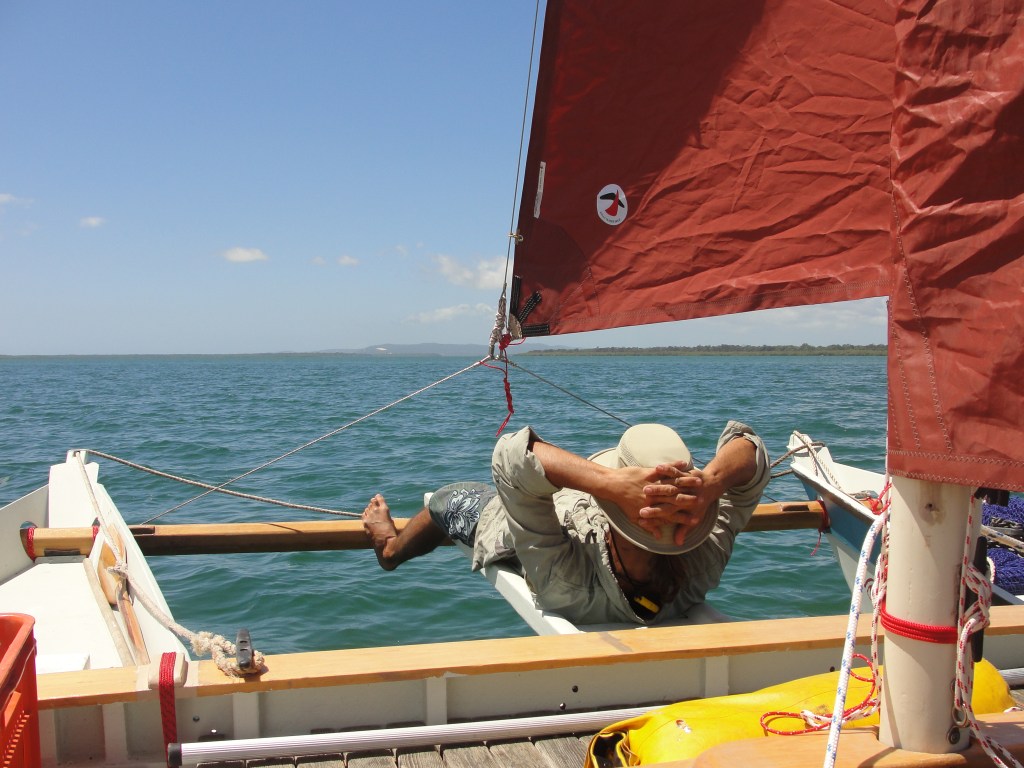
Simple routines like checking the anchor line, watching the weather, or rowing ashore become small rituals. Cooking becomes an act of mindfulness. Even provisioning turns into an adventure, sometimes a frustrating one but an adventure nonetheless.
Boat life also rewires your relationship with time. You’re no longer living by the 9-to-5 schedule. Mornings start with the sun, evenings end with the stars. You eat when you’re hungry, sleep when you’re tired, and let nature set the rhythm. I rarely sleep through an entire night. I generally get up at least two times a night to check on things and look around, but this is offset by downtime periods throughout the day.
Slowing down doesn’t mean doing less — it means ‘doing’ more deliberately. You become more present in your daily life. More connected to your surroundings. More in tune with yourself.
In a culture that values speed, boat life offers something radical: stillness.
7.
Daily Adventure and Discovery
Perhaps the most exciting reason to live on a small boat is this: every day can be an adventure. Even the most ordinary moments can become extraordinary when your life is afloat.
Need groceries? That might mean rowing a dinghy ashore and walking to a local market place…a couple of miles away. Doing laundry could involve chatting with fellow boaters in a marina miles from your last port. Even something as simple as making a meal is a little more engaging when waves are rocking the boat.
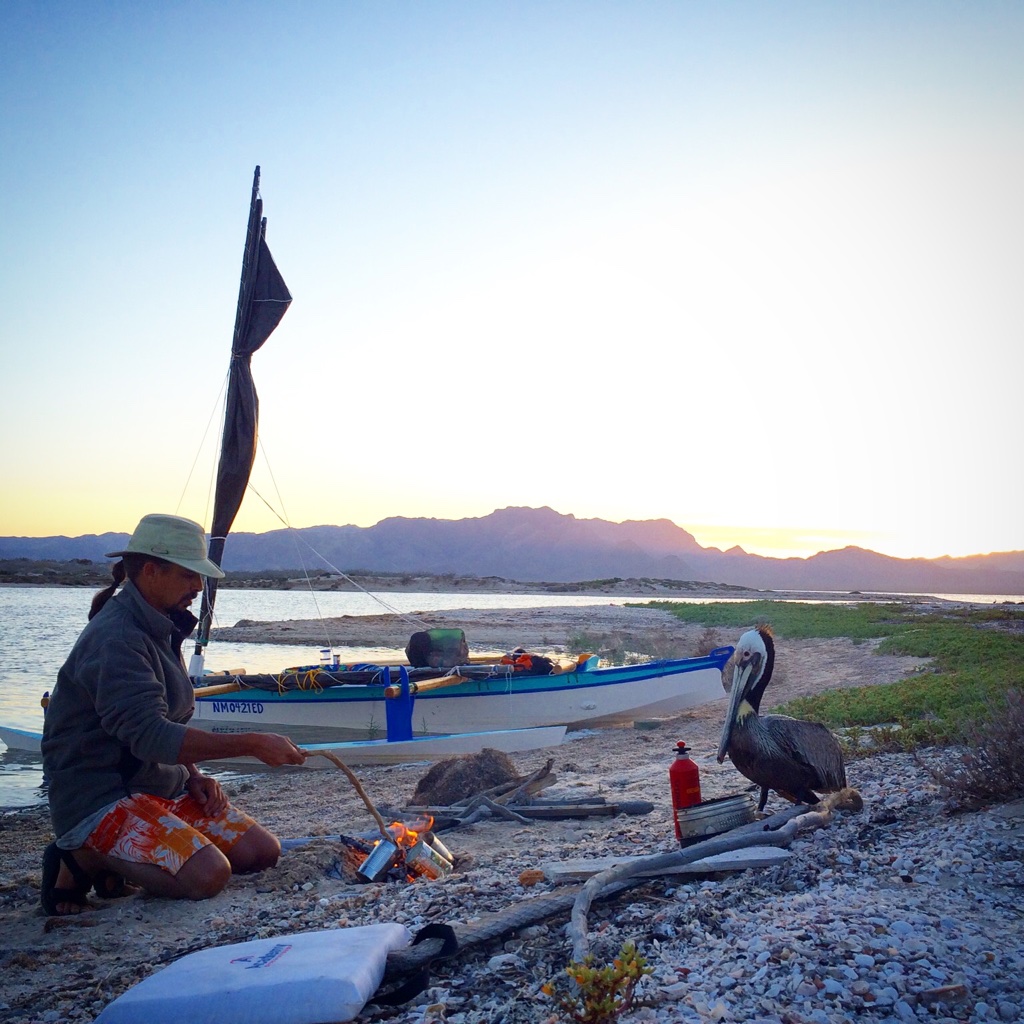
But the real magic comes from the unknown. One morning you might wake up to dolphins swimming around your boat chasing fish sheltering under your hulls. Another you might discover a secret beach, a vibrant local market, or deal with a surprise storm that tests your preparedness and nerve.
This sense of discovery can be addictive. You’re constantly learning about new places, new skills, new people, and new parts of yourself. You become more curious, more courageous, and more creative.
Adventure doesn’t mean chaos or danger. It means being alive. It means having stories to tell. And when your home is a boat, those stories write themselves — in waves, wind, and wonder. It’s mostly only others living this way that can truly understand the magic, but those stories can stoke the fire of dreaming in anyone.
Conclusion: A Floating Life of Meaning
Living on a small boat is not for everyone. It can be challenging, messy, and sometimes really uncomfortable. It requires courage, patience, and a willingness to embrace change. But for those who choose this life, the rewards are deep and lasting.
Freedom, simplicity, nature, affordability, self-reliance, stillness, and adventure — these seven reasons form the foundation of a lifestyle that can be deeply meaningful. On the water, life becomes both smaller and larger. Smaller in square footage, but larger in richness, depth, and presence.
A small boat doesn’t just float, it carries dreams, stories, and the kind of life that many seek but very few find on land. If your heart stirs at the thought of wind in the rigging or sunsets across the water, maybe it’s time to consider life afloat.
Because sometimes, the best way to live large… is to live small.

 Journey Island Style