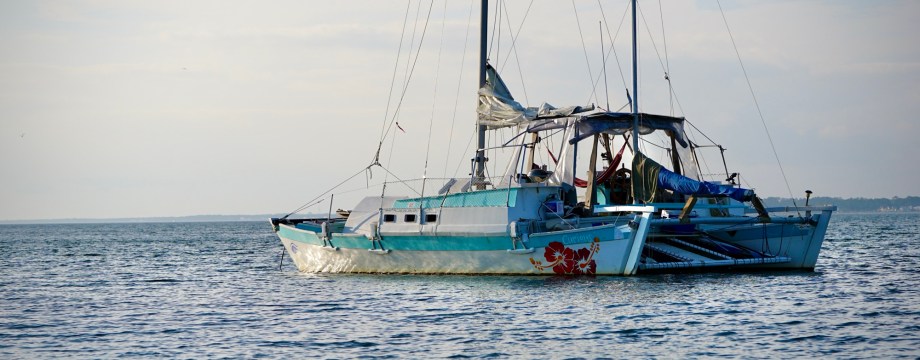
For the first two weeks of 2026 I’ve been gunk-holing along the Gulf Intracoastal Waterway. The weather has set the journey rhythm instead of the calendar or some imaginary deadline I’d feel obligated to obey. When conditions are good for slow comfortable cruising, I make miles—sometimes under sail, sometimes with the steady reassurance of the engine helping out. I know it’s not a purist way of sailing, but I don’t care, it’s seriously relaxing.

When the weather turns foul or even just vaguely disagreeable, I just tuck myself into some quiet, comfortable corner and wait it out. No drama, no heroics. Just patience, a good anchorage, and a sip of rum. It’s a very relaxing way of moving through the world, kind of like strolling instead of marching.
That said, if you’re the sort who stares at the chart, does the math, and thinks to themselves, “My God, I’ve only gone that far!?”—this style of cruising may drive you a little mad. Progress, in the conventional sense, is glacial. Some days the log shows no change at all, and entire weeks can vanish as if you’ve forgotten to make an entry, but it’s just time invested in simply existing.
For me, though, it’s right up my alley. I’ve never been particularly impressed by distance for its own sake. I’ve got friends in the sea kayaking world that love spending entire days paddling in open water, far from land. My place of passion was just outside the surf break, where the world gets dynamic, where life interacts and your a part of it. I’d rather know one place well than rush past ten of them just to say I did it.

On the first of January I struck out for the vast horizon with all the ceremonial gravitas such a moment deserves… and went twelve miles. There I stayed there for four or five days. It was wonderful. There were only a couple of neighbors, the kind that drift in quietly, stay a night or two, and then vanish without much ado at all. I walked nearly that same twelve miles distance, this time on foot, wandering along the local island beaches. I watched fish cruise the shallows, birds going about whatever inscrutable bird business they conduct, and the trainer jets roaring around overhead, reminding me that while I was moving at the speed of weather and tide, the rest of the world was very much not. The whole affair was delightfully laid back, the days blurring together in that pleasant way that only happens when nothing is demanding your attention.
After about a week the weather forecast lined up perfectly. Clear skies, ten to twelve knots blowing exactly where I wanted to go—one of those rare predictions that reads like a personal invitation. I thought to myself “Excellent, just what I wanted”… It was wrong.

It started out well enough. The breeze was building, the sails were full and drawing nicely, and for a brief window in time everything felt aligned. Then, with no warning, the wind simply gave up. It didn’t shift or misbehave; it just went away. So I started the motor and settled into a long day of motor-sailing, hoping the breeze might remember it had an appointment. It didn’t. Eventually I dropped the sails altogether and just puttered along, the engine rumbling away like it was mildly disappointed in me.
Late in the day enough breeze wandered back to justify hoisting the mainsail again, more as moral support for the engine than anything else. It wasn’t doing much—until the last few miles leading into the anchorage at Navarre, Florida. There, as if to make amends, the wind filled in just right and suddenly we were making about seven knots under the mainsail alone, gliding in as though the entire day had been carefully choreographed rather than haphazardly improvised.
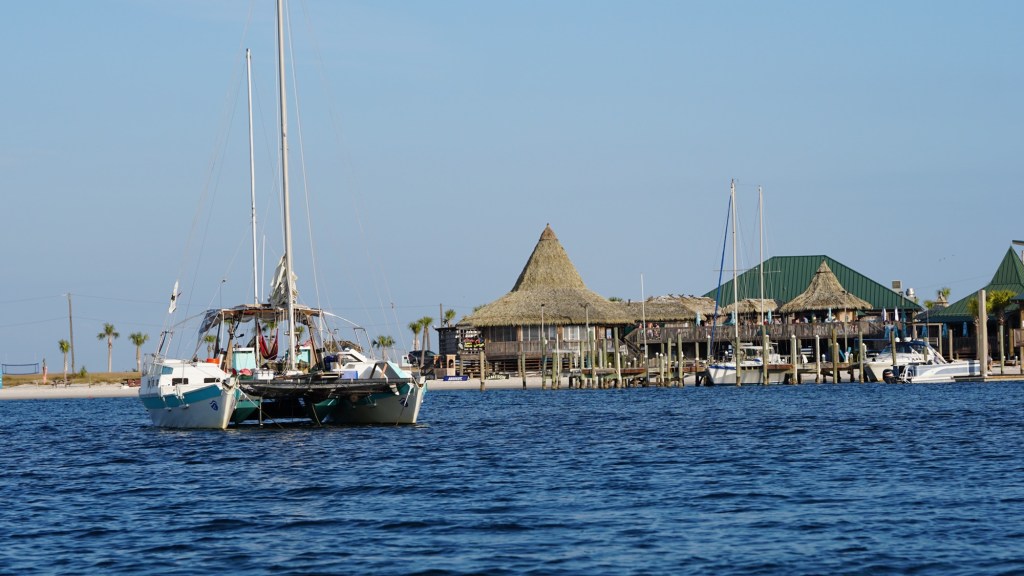
I dropped the anchor just off Juana’s Tiki Bar at Navarre, jumped into the dink, and went ashore for a cold beer. Perspective has a way of returning once there’s condensation on the glass. All in all, it wasn’t a terrible day—just a little frustrating, the nautical equivalent of being promised a smooth road trip and ending up in construction zones all afternoon.
I’d planned to hang there for a day or two, but the weather turned overcast and a bit dreary. Add in nighttime bridge traffic and the glow of condo lights bouncing around the fog, and the place lost its charm for me. Pretty in its own way—but not the kind of pretty I’m after. I prefer my nights darker and quieter, even if fog does make the condos look like ghost ships suspended in the mist.
The next stop was Spectre Island, tucked into a skinny stretch of the ICW near Mary Esther, Florida. It’s a little jewel of a spot, with a delightful anchorage tucked in behind it—fully protected from weather and boat wakes, the kind of place that immediately makes you breathe easier once the hook is down.
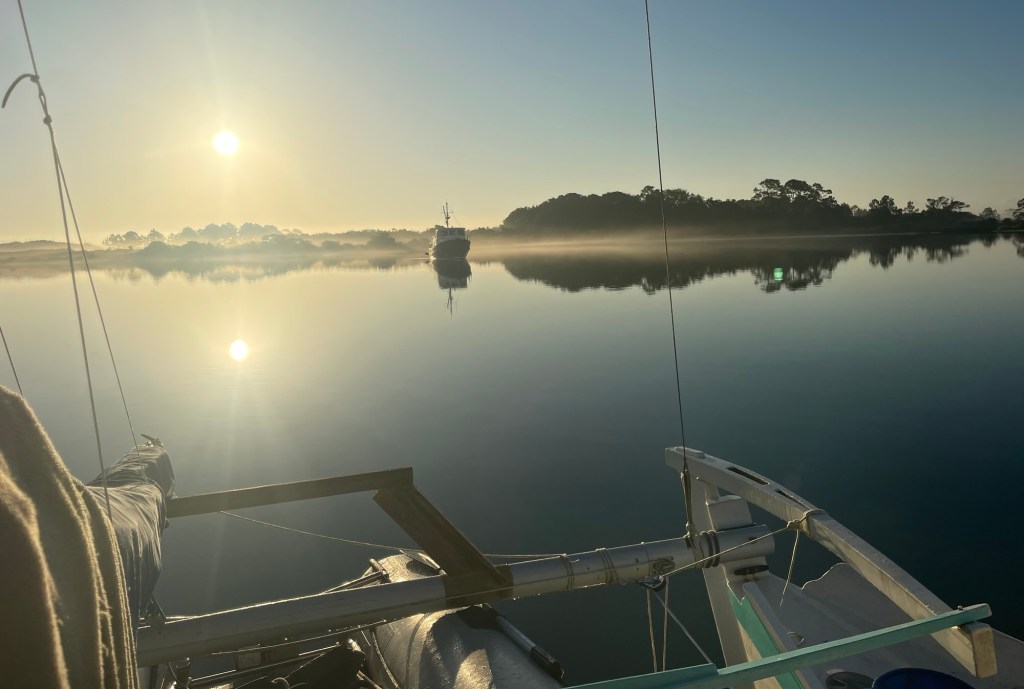
While I was there, the fog rolled in and it stayed for days, all day. Visibility dropped below a hundred feet at times, and it’s remarkable how claustrophobic it feels to sit inside a cloud. Sound and light shrink down to almost nothing, and without any real reference points the world feels oddly unreal. It’s like being stuck in a dream you can’t quite wake up from, where everything is muffled and close and slightly wrong.

Then, eventually, the fog lifts. The sky opens up and reveals blue again, and it looks impossibly bright, as if someone turned the saturation knob all the way up. The contrast is startling and wonderful, a reminder of just how much you’d been missing without realizing it. Moments like that feel like a small reward for moving slowly enough to be there when they happen.
I’ve still got a couple of days with wind gusts approaching 30 knots so I’ll remain here at anchor, watch the stingrays and herons, enjoy the surf sounds coming from the Gulf, and drink coffee and sip rum. After the front passes I’ll spend nearly a week getting to the clear emerald waters around Panama City Beach area, and do the same thing for a while.
Someone’s got to do it.
 Journey Island Style