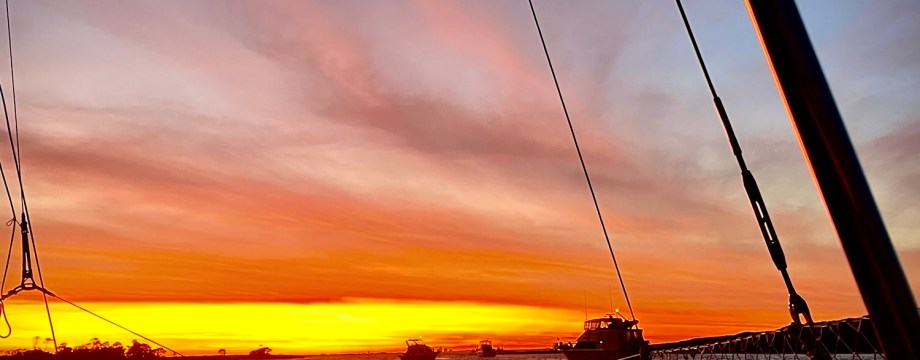
I think I may have stumbled onto an additional journey concept—or maybe it’s better described as an evolution of how I’d like to move through the world for a while.
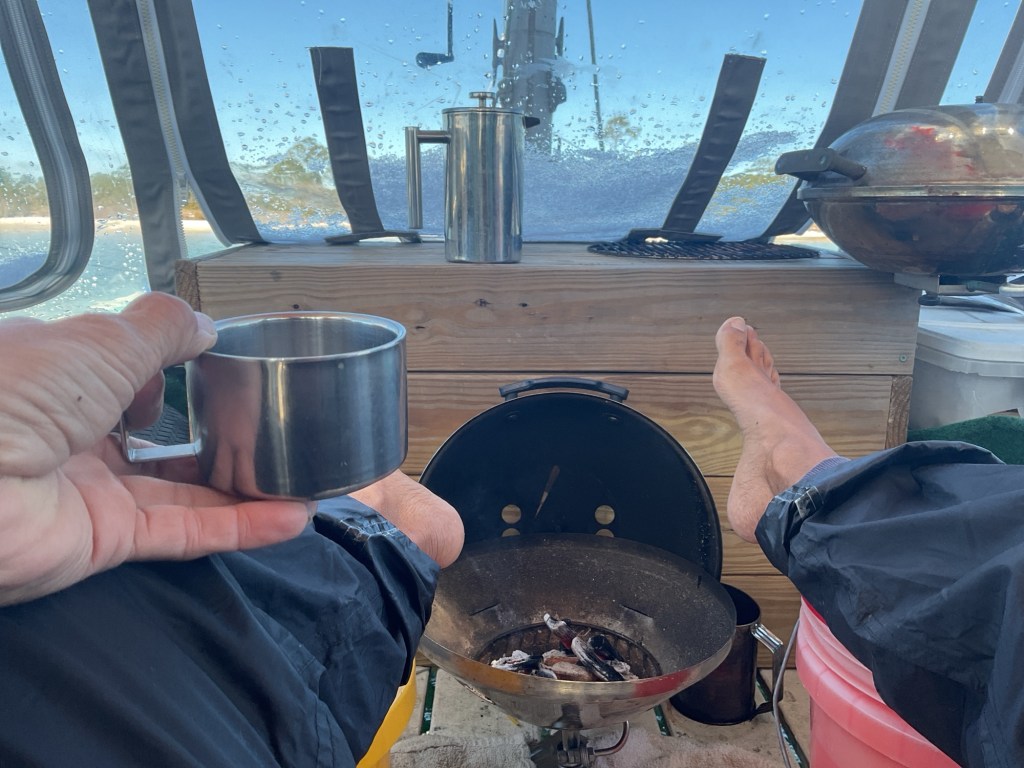
I’ve lived aboard for about two years now. For the most part, it’s been rather lovely: never staying in one place more than a few days or a week, drifting from one bayou or bay to another, rarely venturing very far. Just being an aquatic vagabond, unhurried and largely content.
This way of living has been enormously helpful in my recovery after the accident years ago.
Physically, I plateaued a long time back. The surgical repairs are as good as they’re ever going to be, and the things that weren’t dealt with represent a permanent reduction in what I can do. I’ve tested it a few times—two or three days of hard yakka—and the result is always the same: a week or two laid up in bed, chewing pain meds and wondering why I didn’t already know better.
Mentally and emotionally, the recovery has been slower and far more frustrating. My short-term memory and brain fog come and go—some days sharp, some days not so much—but the brain-training exercises seem to be helping, if slowly. Anxiety still visits from time to time. Most days I’m steady and even-keeled, but occasionally, for no obvious reason, everything feels threatening. Those episodes are becoming less frequent and less intense, which tells me progress is happening, whether I notice it or not.
Living mostly alone on the boat these past couple of years has helped me become more self-reliant and more comfortable with who I am now—because I’m definitely not the same person I was before the accident. I’ve leaned on close friends and family when I needed to, but learning to manage life aboard on my own has been profoundly beneficial.
As the winter of 2026 approached, I felt an increasing pull to journey farther afield. Around that time, I listened to a psychiatrist give a TED talk on the virtue of boredom—pleasant boredom, specifically. The idea was that when we allow ourselves to be bored, our imagination wakes up and starts whispering what if?
I set off on the very first day of 2026. It felt intentional, maybe even a little ceremonial. I’m now at the tail end of my second week away, and honestly, it feels like I’ve been gone for months. That creates a bit of friction in my head. Part of me feels like I’m dawdling, moving too slowly. But I also know that feeling is just my perception, not reality.
The reality is this is exactly what I dreamed of and planned for.

I’ve come to understand that I live with something called time blindness. Many people experience it as chronic lateness or missed deadlines—I know one well; I’m married to her. For me, it’s different. I actually enjoy being on time, or a bit early. My version of time blindness is not realizing how much time has passed. Days, weeks, even years can slip by without my noticing.
So while I’ve only been gone a couple of weeks, it feels like a month or more, as though I’ve been doodling along without purpose. In one sense, that’s true—I am slow traveling. But I’m not wasting time.
From the beginning, my plan was simple: travel only when conditions favor the direction I want to go. If the wind or weather disagrees, leave the anchor down, pour another cup of coffee, and enjoy where I am.
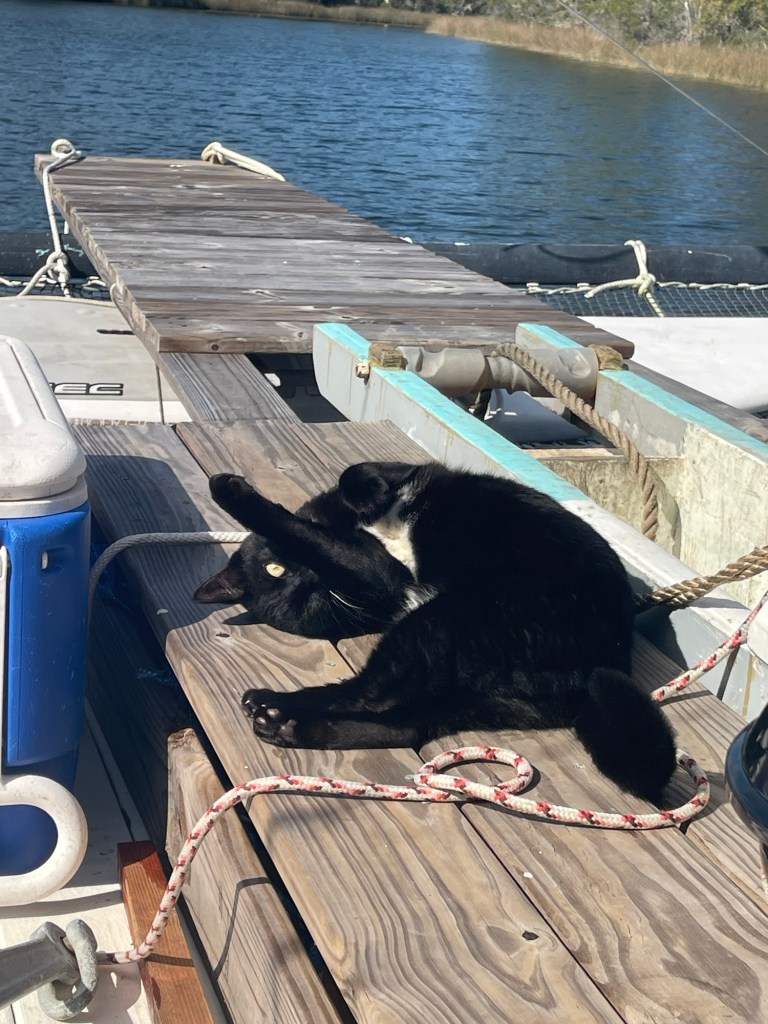
I’ve been doing exactly that, but my thinking around it has shifted slightly. Originally, I’d wait out foul or contrary weather and move on as soon as conditions turned favorable. The evolution is this: if I’m held in a place for two or three days by bad weather, I now find myself wanting to spend an equal amount of time there once the conditions are good—to actually enjoy the place at its best.
What that means, of course, is that the slow journey just got slower. I’m going to take a lot longer to get anywhere I might eventually want to end up.
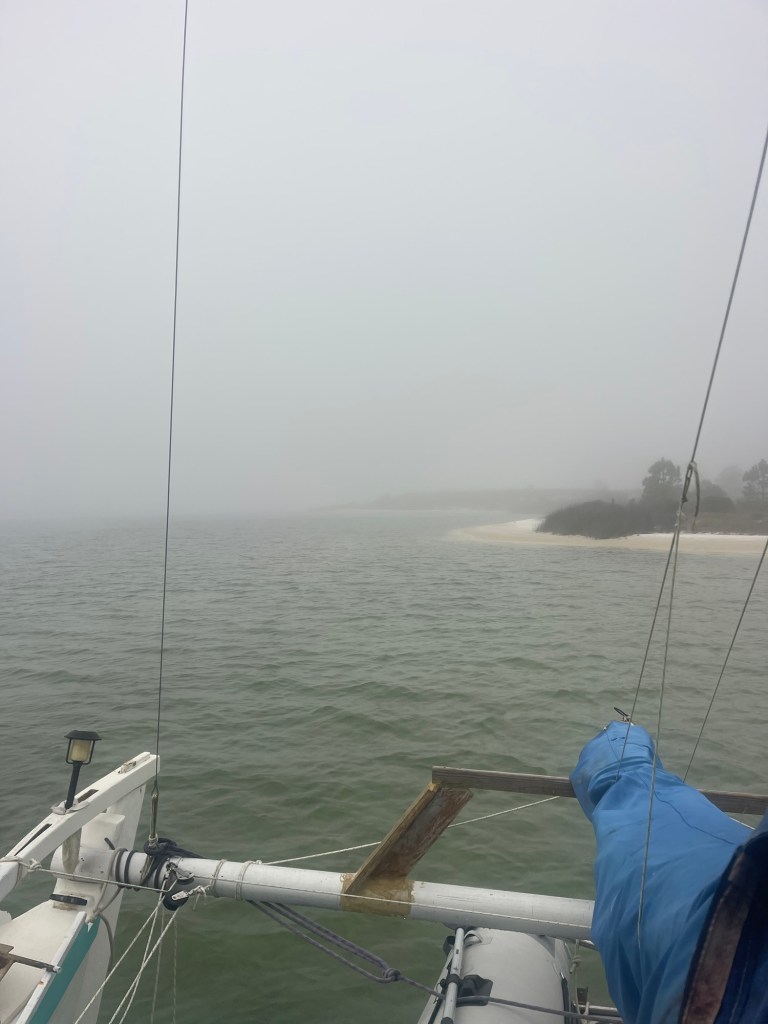
Take my current anchorage. I arrived sooner than planned because sitting at Navarre—wedged between condominiums and a busy bridge, wrapped in damp, clammy fog—wasn’t pleasant. Once I dropped the hook here, I was greeted by two or three days of dense fog, visibility down under a hundred feet, everything on deck soaked and dripping. When the fog finally lifted, it was followed by a couple of cold days with gusts up to 25 knots.
That’s nearly a week gone. After that came two days of perfect breeze, blowing exactly where I wanted to go. Under the original plan, I would’ve weighed anchor and carried on. The downside would’ve been leaving this lovely anchorage—tucked behind a small island, sheltered from wind and wakes—without ever seeing it in decent conditions.
So the new working plan is this: if I find myself stuck in a good place because of bad weather, I stay long enough afterward to enjoy it when it’s kind.
I know this turns an already slow journey into an even more drawn-out one. And for the life of me, I can’t see how that’s a problem—except, perhaps, the very real risk of running out of rum before the next planned resupply.
This now allows me more time to be bored.
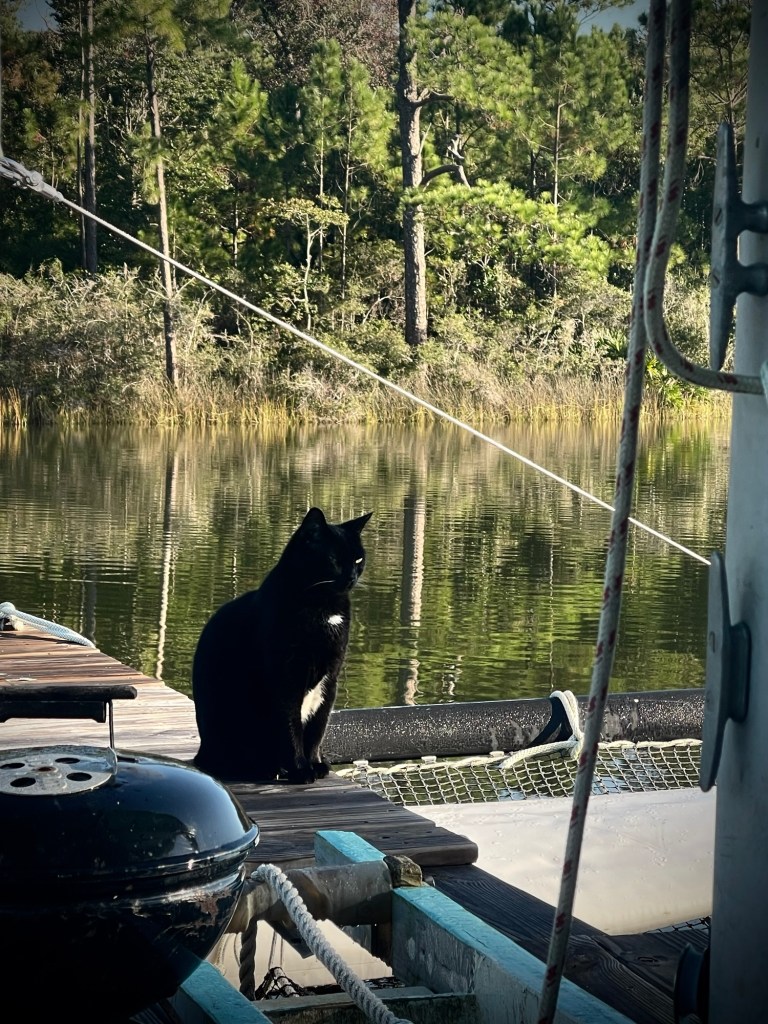
I still do what needs to be done—boat maintenance, fixing things before they become emergencies, and poking away at what may or may not turn into a writing career. None of that goes away. Old boats are very good at reminding you when you’ve ignored them.
But somewhere in all of this I’ve also given myself permission to do nothing. To sit. To stare. To let boredom show up and make itself comfortable. After a while it stops being annoying and starts doing useful work, which is unexpected and slightly suspicious.
Once boredom settles in, my imagination can wander off on its own. It disappears down rabbit holes without asking whether the trip will be productive or even sensible. I follow along, mostly to see what happens. Sometimes it leads nowhere. Sometimes it hints at where this odd, stripped-down life might be headed.
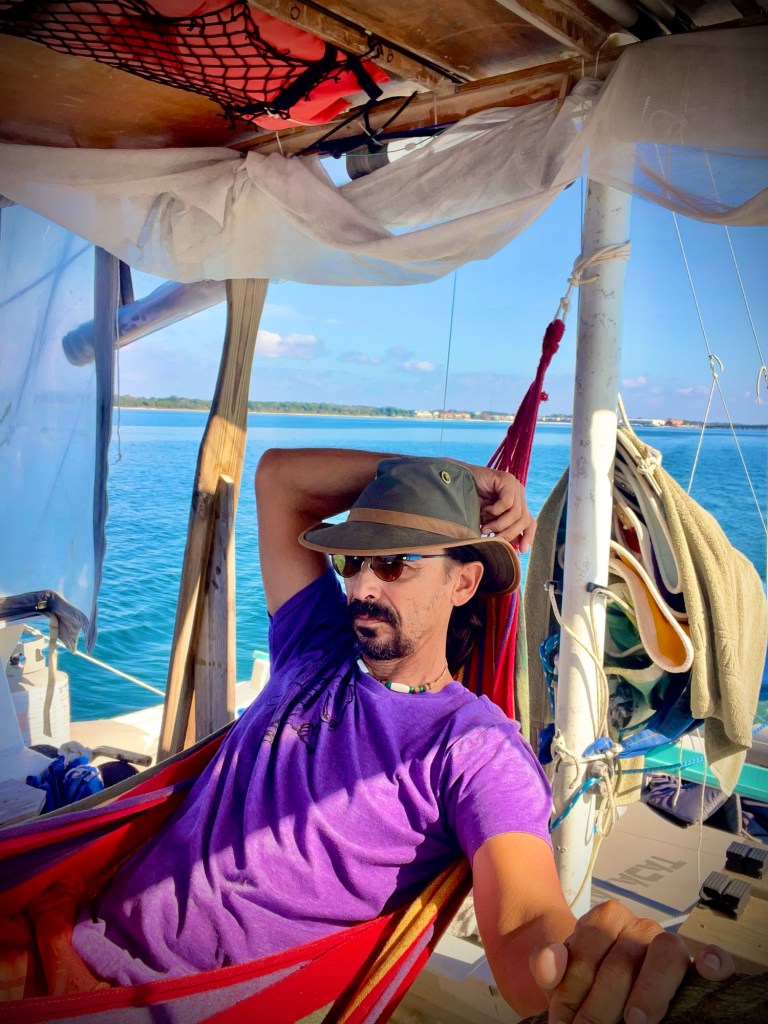
I’ve learned that boredom isn’t wasted time. It’s just the part of the day where nothing is officially happening, and everything important is quietly lining up.
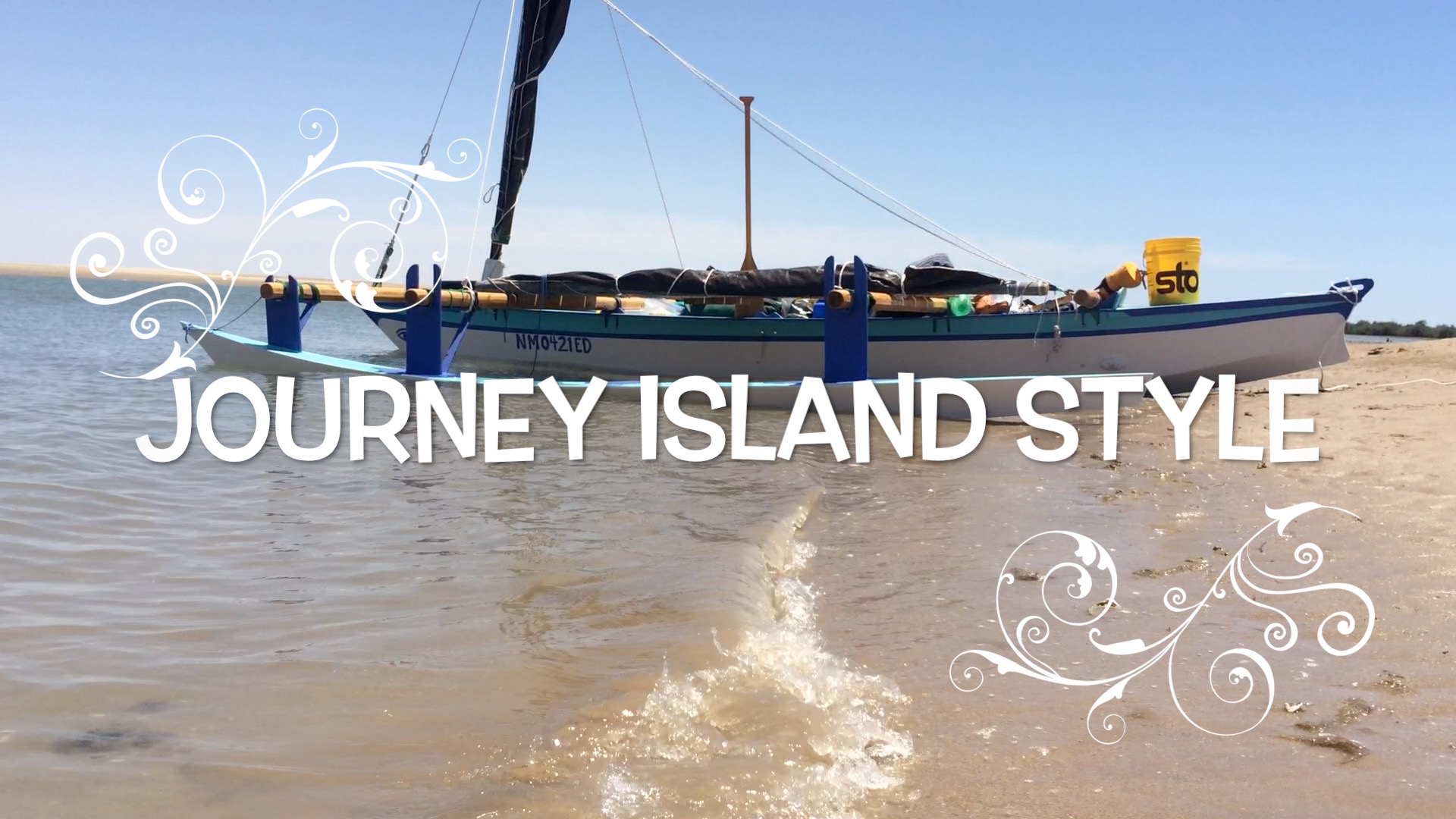
 Journey Island Style