Posts Tagged With: live aboard sailing

Daily Rituals

As afternoon approaches, the boat, the kitty cat, and myself, have usually finished the days boaty requirements for life afloat. I’ve cleaned, checked and maintained things, the boat is still floating on the water, and the kitty?…well, he shit in a box, then slept on my pillow.
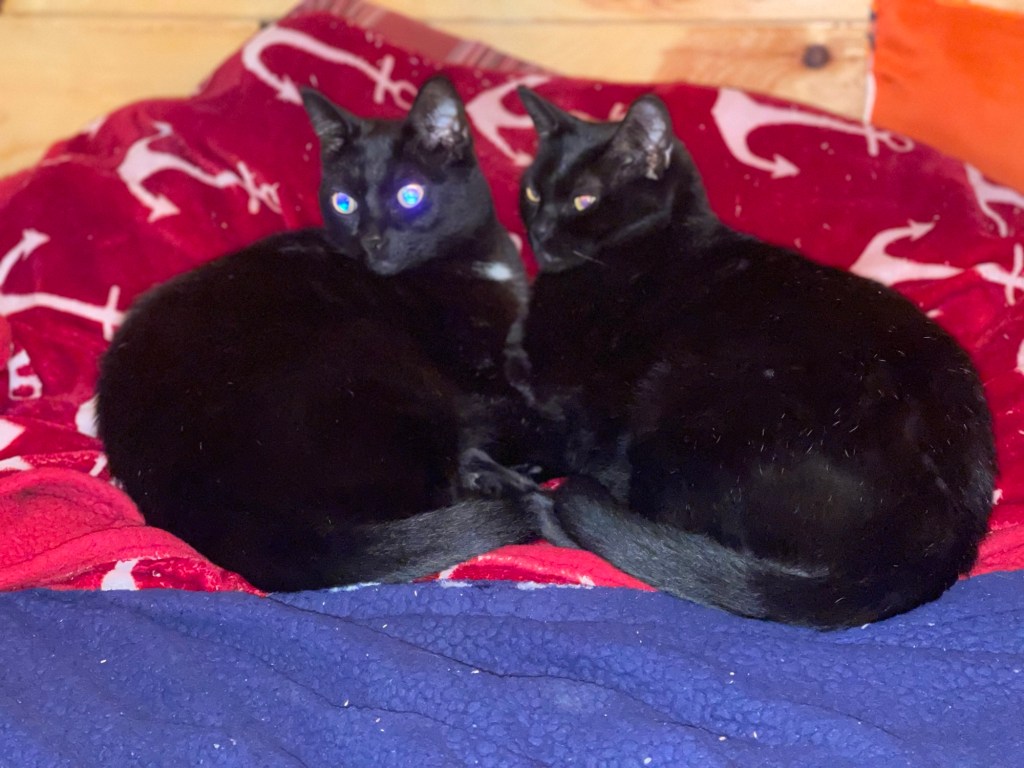
A Memory Of His Brother

I’ve done the necessary jobs—checked the anchor, cleaned the galley, written a few paragraphs that I won’t be happy with later—and the day’s temperature is cooling off for the night. This is usually when I declare it officially Bath O’Clock.

My bathing setup is a modest affair, something my dear mother calls “A Budgie Bath”, (like a small bird dipping and fluttering in a puddle of water): one bucket, one pot, and a vague belief in personal hygiene. The pot is put on to boil with heart felt anticipation, because hot water aboard a boat should never taken lightly. While it heats, I stand around playing some idiot game on the iPhone like Tetris. Eventually those lovely bubbles arrive, I fail at reaching the next level, and heated vapor wafts around the galley. Boiling water gets poured into the bucket of cold reaching that perfect temperature best described as “civilized but not indulgent.” A ratio of two parts cold and one boiling seems to work fairly often.
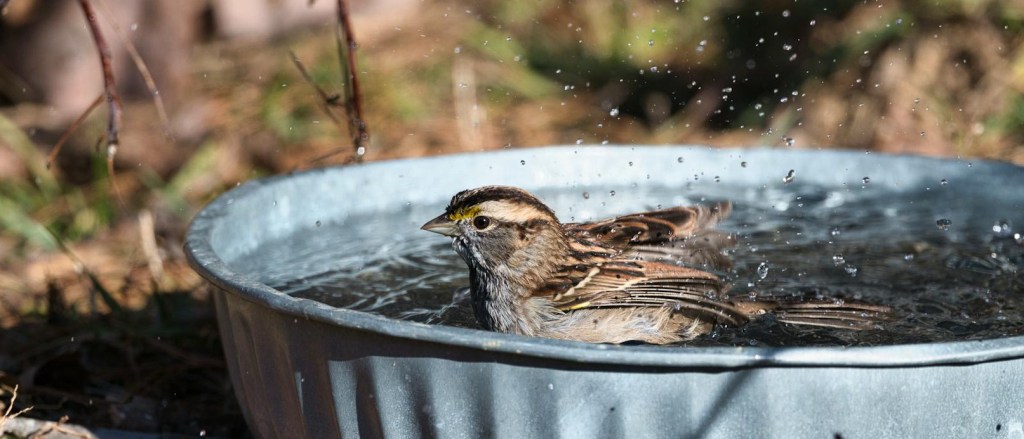
It Works For Birds

There is something wonderfully humbling about bathing with a bucket. No taps. No endless supply. No illusion that you can just stand there lost in thought while gallons of piped and heated water cascade endlessly down your back. Every dip of the cup is intentional. Every splash is accounted for. This is hygiene with a budget, and it keeps one honest, especially when it’s cold up on deck.

I start at the top, and with filled hands splash on my face and neck. The first hit of hot water always feels good, summer or winter. The brain gets a hit of happy, and the world is all good. Even though this wash down will be short lived it is, in fact, very good for the soul. Salt, sweat, and the general stickiness of the day gets instantly diluted and sluiced away.

After my face and neck is done, the most important is the main stank generators; BBP – Bum-Balls-Pits. Get these rinsed out well, and the rest is pure indulgence.

Washing like this has an old world feel to it. I can imagine hearing a ship’s bell or anticipating my daily rum ration. There’s a rhythm to it: scoop, pour, scrub, repeat. It’s not rushed, but it’s not languid either. You don’t linger when you know the hot water is finite, especially when the air is cold. You focus, get it done, get dried off before the chill sets in.

Probably Not This Enjoyable

If I take too long, by the time I reach my feet, the water is cooling off, and so am I, especially if the sun is getting close to the horizon. Luckily, with the boat at anchor, it always falls nose into the wind and I get a little breeze protection from the front covers. I then tip the remaining water over myself in one final, decisive act and that’s that. Clean enough. Human again.

No soap. We haven’t used soap in basic showering for twenty years or more. Soaps strip away the skin’s natural oil supply, which is what we’re biologically designed to have for healthy skin. Hot water opens pores and washes away excessive sweat buildup without leaving behind any artificial odorants. Surely the stink-pretty chemicals can’t be good for you.

What always surprises me is how satisfying this little event is. This simple, slightly awkward ritual marks the end of my typical day more clearly than any clock ever could. It draws a line between effort and rest, even if I’ve done nothing all day.
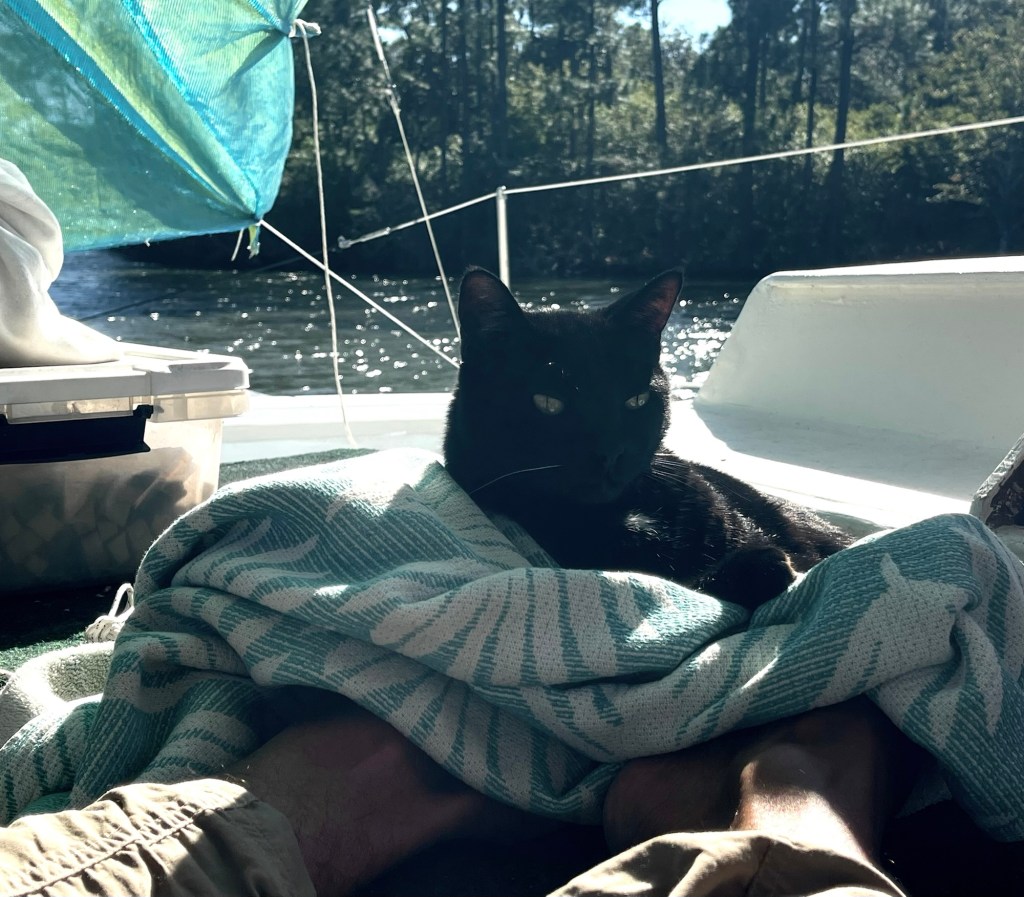
Clean and Snuggled

Afterwards, I cook my nightly meal, then sometimes hang in the hammock to enjoy the moment or stretch out on my bed to watch a movie, freshly rinsed, wearing clothes that feel inexplicably luxurious simply because I’m clean inside them.

There is no mirror involved in this process, and I think that’s for the best. This bath isn’t about appearances. It’s about feeling vaguely respectable while drifting around floating through life. And almost every afternoon, with my bucket of hot water, I manage it just fine.
Categories: Journey Skills | Tags: , , , , | Leave a comment

After Two Years of Life Aboard

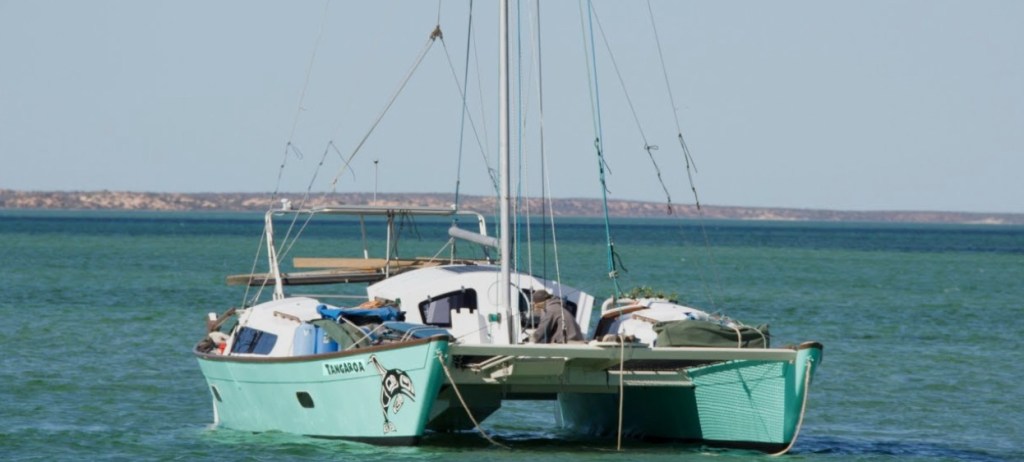
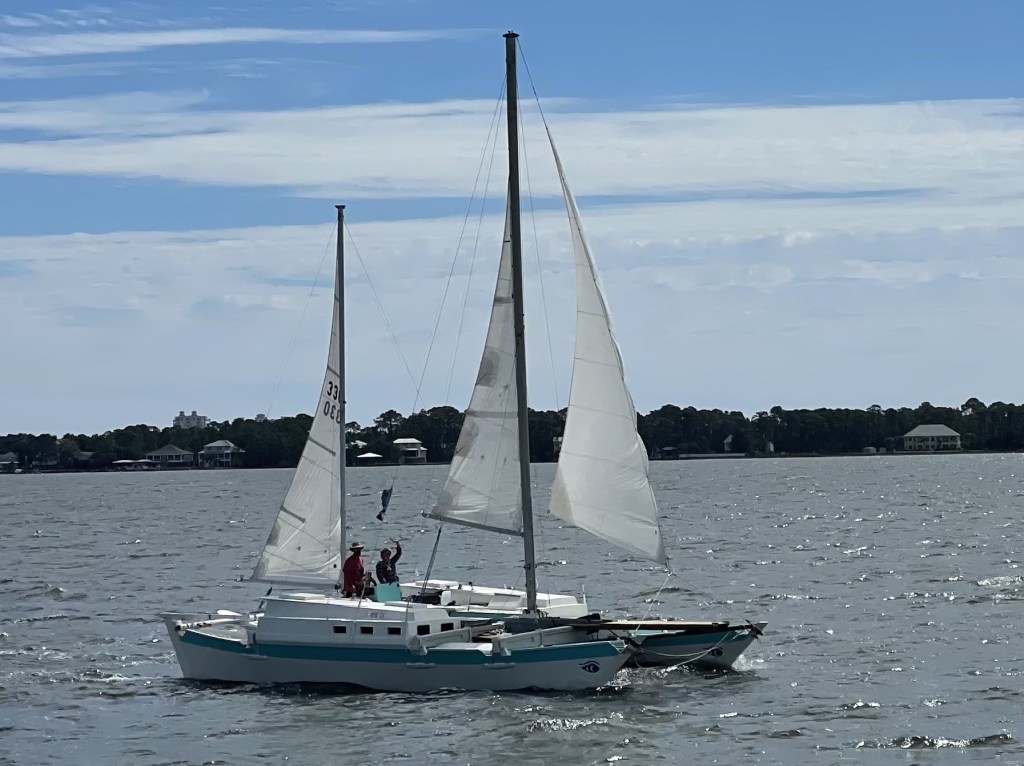
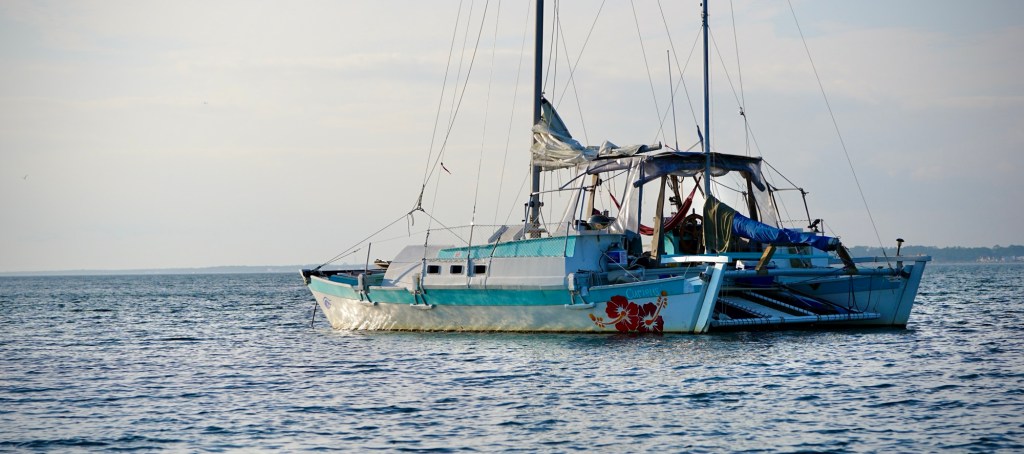
After around two years of living aboard my James Wharram Design – Tangaroa 35, I’ve come to a couple of realizations.

A Fun Lifestyle ~ For Warm Climates

Not revelations exactly—nothing dramatic or lightning-bolt in nature—just the slow, inevitable kind that sneak up on you when you’ve spent enough time with a thing that also happens to be your house. Kind of like when you’ve been sitting around the fire drinking with a mate for a few hours…then get up to take a leak and find yourself with a little stagger. It’s comes as bit of a surprise.

The first realization is fairly obvious: I genuinely love this design concept. I love the simplicity of these boats, their honesty. I’ve spent many years of my life teaching sea kayaking, canoeing, and general outdoor education. During this time I either lived out of my off-road van, or out of a backpack, or dry bags and canoeing drums. I always dreamed that the next logical step was to live on a Wharram catamaran, which in a true sense, is like living in two really, really big canoes.

These early, classic designs feel less like consumer products and more like tools. They’re basic in the truest sense of the word—unpretentious, functional, and, especially the early designs, they’re built like tanks. There’s nothing fragile about them, nothing fussy. They feel like boats that expect to be used, not living in a marina, but be parked next to empty beaches.

In Its Proper Environment

The second realization took longer to articulate, but it’s probably the more important one. These boats are extremely lifestyle-specific.

Now, what I mean by that is this: in most modern catamaran designs, a 35-foot boat is reasonably big. You can live on it comfortably. You get a proper salon, a protected center deck, a table you can gather around with five or six people, and a space that functions as a real interior room. You can enclose your world when the weather turns cold, wet, or miserable for days at a time—and when you live on board, that matters.

The Wharram designs in the 30–35 foot range, like all of James Wharram’s boats, are fundamentally different animals. They are not built to live inside. They are built to live upstairs, on deck, enjoying being a part of the environment.

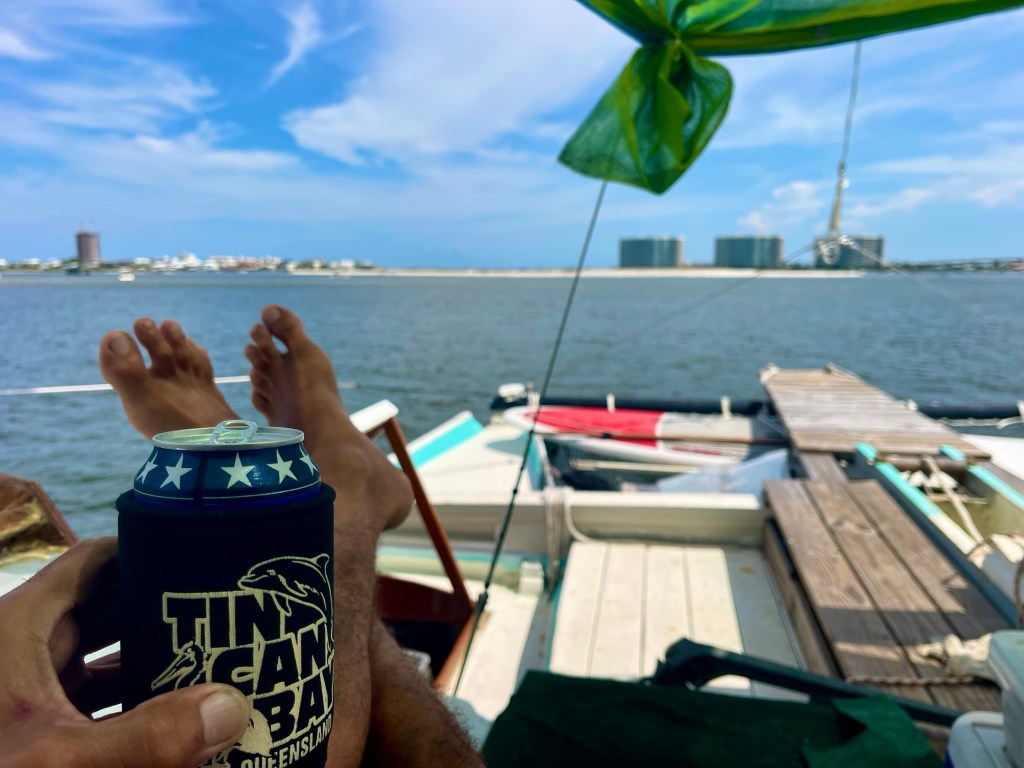
Shade From the Hot Sun, and a Cold Beer

They’re elemental boats. Outdoor boats. Boats that assume you’ll be on deck, in the wind, in the sun, in the salt, in the rain squalls, in the weather itself. Their natural habitat is warm climates, trade winds, and tropical rain showers. They utilize temporary tarps for rain protection, sun shade, and still allow airflow—not sealed cabins and climate-controlled interiors. The lifestyle they imply is more beach than marina, more barefoot than boat shoes, more tarps and canvas than fiberglass furniture.

Some of these smaller Wharram owners have fitted deck pods midship between the hulls, and by all accounts, many of them are very happy with the results. A well-designed pod absolutely changes the livability of these boats.

Aqua Tangaroa with a Good Looking Pod

But this is where things get delicate.

It doesn’t take much to ruin the visual balance of a Wharram. A pod that’s a little too tall, a little too square, a little too boxy—and suddenly you’ve got what looks like a shed bolted into the middle of a boat. Proportion matters. Profile matters. Windage, matters. One of the core design principles James and Hanneke always worked to preserve was low windage profile and open decks, and it’s surprisingly easy to destroy that with good intentions and bad geometry.

Helm Station Hard Top

On my own boat, I went a more conservative route. I built a helm station hardtop that covers roughly a 6’ x 8’ area between beams three and four. From the side profile, it doesn’t really change the look of the boat much at all, but functionally it’s been a gift. It gives constant shade in summer, which, with high summer humidity and heat here on the gulf coast, is not a luxury—it’s survival equipment. And I can attach canvas and clear panels around the edges for a little wind and rain protection when needed.

Not a Complete Enclosure

What it does not provide, however, is true enclosure.

When it’s genuinely cold here from Arctic fronts that roll south through winter—when temperatures hover not far above freezing for days on end—it doesn’t create a space you can live in. It helps. It improves conditions. But it doesn’t give you a warm room. It doesn’t give you a communal refuge. It doesn’t create that psychological sense of “inside” when the world outside is unpleasant.

And that brings me to the real point of all this.

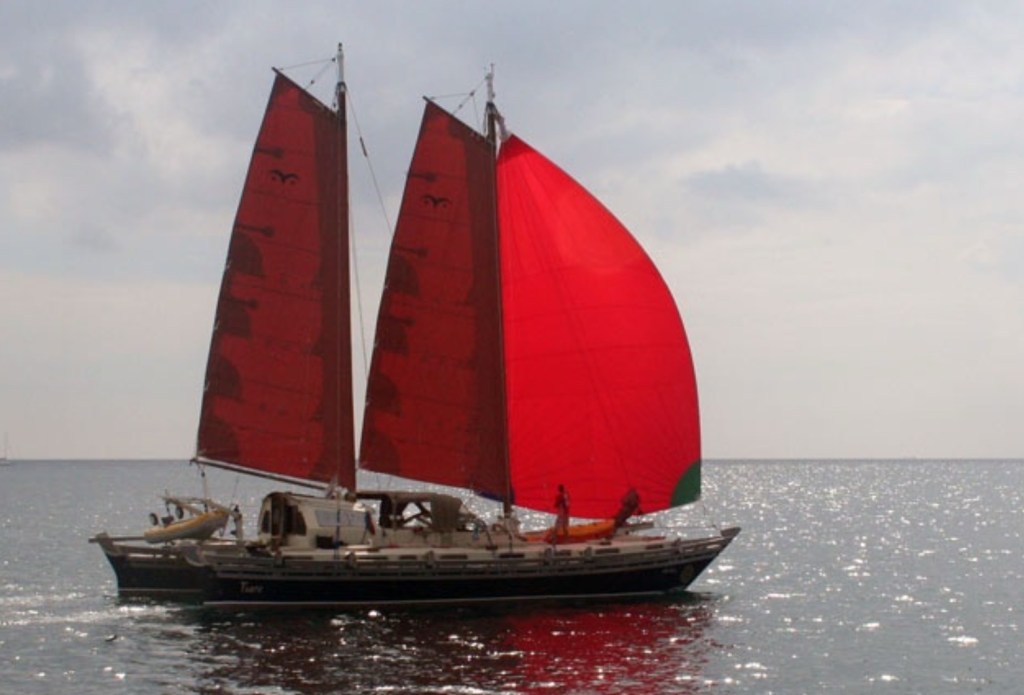
If I were starting again from scratch, knowing what I know now, I would almost certainly be living on a Wharram design in the 40 to 55 foot range.

In fact, I find myself actively daydreaming about it—about finding another rebuild project in that size class and starting over again.

Every boat I’ve visited in that size range share the same revelation: that extra length changes everything. It’s not incremental—it’s transformational. That additional length creates a massive increase in usable internal volume down in the hulls. Storage, living space, systems space, breathing room. And more importantly, it allows for a genuinely livable midship pod between the hulls that still maintains a low profile, clean lines, and sensibly low enough windage.

You can create a protected communal space without turning the boat into a floating apartment block.

And that space matters more to me now than it used to—especially under way. A protected area where other people can exist comfortably while sailing, not just endure the passage. A place to sit, read, talk, cook, and be human while the boat is moving through the world.

The other realization is more philosophical than practical.

I’ve come to see the 30–35 foot Wharrams as oversized beach cats.

A Really Big Beach Cat

That’s not criticism—it’s admiration.

They’re essentially Hobie cats that grew up, went offshore, and learned how to carry a kitchen, a bed, and a pantry. You get all the fun, lightness, and simplicity of a beach cat, but with the luxury of sleeping in a real bed, cooking in a wraparound galley, and storing enough gear, books, tools, and projects to keep yourself occupied indefinitely.

They are brilliant at what they are.

But what they are is a lifestyle choice.

And my lifestyle has quietly evolved.

I still love the simplicity. I still love the elemental nature of the design. I still love living with less, moving lightly, and keeping systems simple. But I’ve also come to realize the value of protected space, communal warmth, and the ability to hang out up on deck comfortably with friends when the weather is cold, nasty shite, rather than romantically inconvenient.

So yes—if I were starting again, I’d go bigger. Not for luxury. Not for status. Not for comfort in the conventional sense.

Islander 55 ~ Tiaré

But for livability.

For proportion.

The practicality of that extra length turns an outdoor life into a more balanced one—where you can still live in the elements, by choice, but you’re no longer owned by them.

Categories: Journey Skills | Tags: , , , , , | Leave a comment

Exploring the Gulf ICW

For the first two weeks of 2026 I’ve been gunk-holing along the Gulf Intracoastal Waterway. The weather has set the journey rhythm instead of the calendar or some imaginary deadline I’d feel obligated to obey. When conditions are good for slow comfortable cruising, I make miles—sometimes under sail, sometimes with the steady reassurance of the engine helping out. I know it’s not a purist way of sailing, but I don’t care, it’s seriously relaxing.

When the weather turns foul or even just vaguely disagreeable, I just tuck myself into some quiet, comfortable corner and wait it out. No drama, no heroics. Just patience, a good anchorage, and a sip of rum. It’s a very relaxing way of moving through the world, kind of like strolling instead of marching.

That said, if you’re the sort who stares at the chart, does the math, and thinks to themselves, “My God, I’ve only gone that far!?”—this style of cruising may drive you a little mad. Progress, in the conventional sense, is glacial. Some days the log shows no change at all, and entire weeks can vanish as if you’ve forgotten to make an entry, but it’s just time invested in simply existing.

For me, though, it’s right up my alley. I’ve never been particularly impressed by distance for its own sake. I’ve got friends in the sea kayaking world that love spending entire days paddling in open water, far from land. My place of passion was just outside the surf break, where the world gets dynamic, where life interacts and your a part of it. I’d rather know one place well than rush past ten of them just to say I did it.

Yep, I can hang in my Hammock while steering

On the first of January I struck out for the vast horizon with all the ceremonial gravitas such a moment deserves… and went twelve miles. There I stayed there for four or five days. It was wonderful. There were only a couple of neighbors, the kind that drift in quietly, stay a night or two, and then vanish without much ado at all. I walked nearly that same twelve miles distance, this time on foot, wandering along the local island beaches. I watched fish cruise the shallows, birds going about whatever inscrutable bird business they conduct, and the trainer jets roaring around overhead, reminding me that while I was moving at the speed of weather and tide, the rest of the world was very much not. The whole affair was delightfully laid back, the days blurring together in that pleasant way that only happens when nothing is demanding your attention.

After about a week the weather forecast lined up perfectly. Clear skies, ten to twelve knots blowing exactly where I wanted to go—one of those rare predictions that reads like a personal invitation. I thought to myself “Excellent, just what I wanted”… It was wrong.

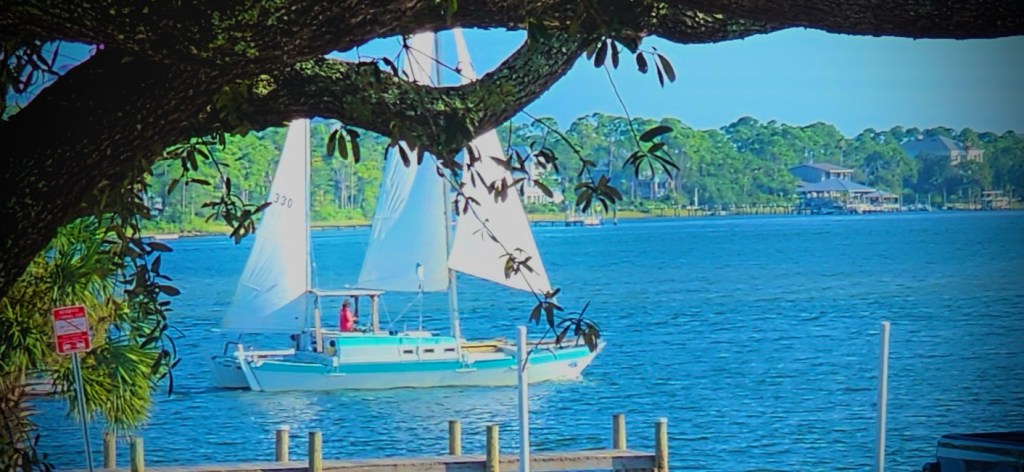
It Started Well

It started out well enough. The breeze was building, the sails were full and drawing nicely, and for a brief window in time everything felt aligned. Then, with no warning, the wind simply gave up. It didn’t shift or misbehave; it just went away. So I started the motor and settled into a long day of motor-sailing, hoping the breeze might remember it had an appointment. It didn’t. Eventually I dropped the sails altogether and just puttered along, the engine rumbling away like it was mildly disappointed in me.

Late in the day enough breeze wandered back to justify hoisting the mainsail again, more as moral support for the engine than anything else. It wasn’t doing much—until the last few miles leading into the anchorage at Navarre, Florida. There, as if to make amends, the wind filled in just right and suddenly we were making about seven knots under the mainsail alone, gliding in as though the entire day had been carefully choreographed rather than haphazardly improvised.

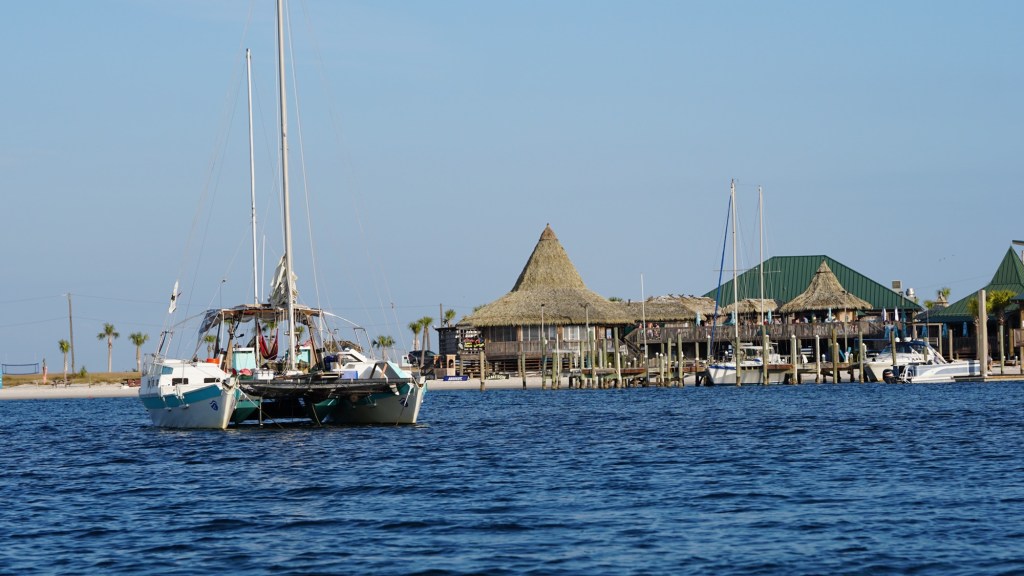
I dropped the anchor just off Juana’s Tiki Bar at Navarre, jumped into the dink, and went ashore for a cold beer. Perspective has a way of returning once there’s condensation on the glass. All in all, it wasn’t a terrible day—just a little frustrating, the nautical equivalent of being promised a smooth road trip and ending up in construction zones all afternoon.

Juana’s Tiki Bar

I’d planned to hang there for a day or two, but the weather turned overcast and a bit dreary. Add in nighttime bridge traffic and the glow of condo lights bouncing around the fog, and the place lost its charm for me. Pretty in its own way—but not the kind of pretty I’m after. I prefer my nights darker and quieter, even if fog does make the condos look like ghost ships suspended in the mist.

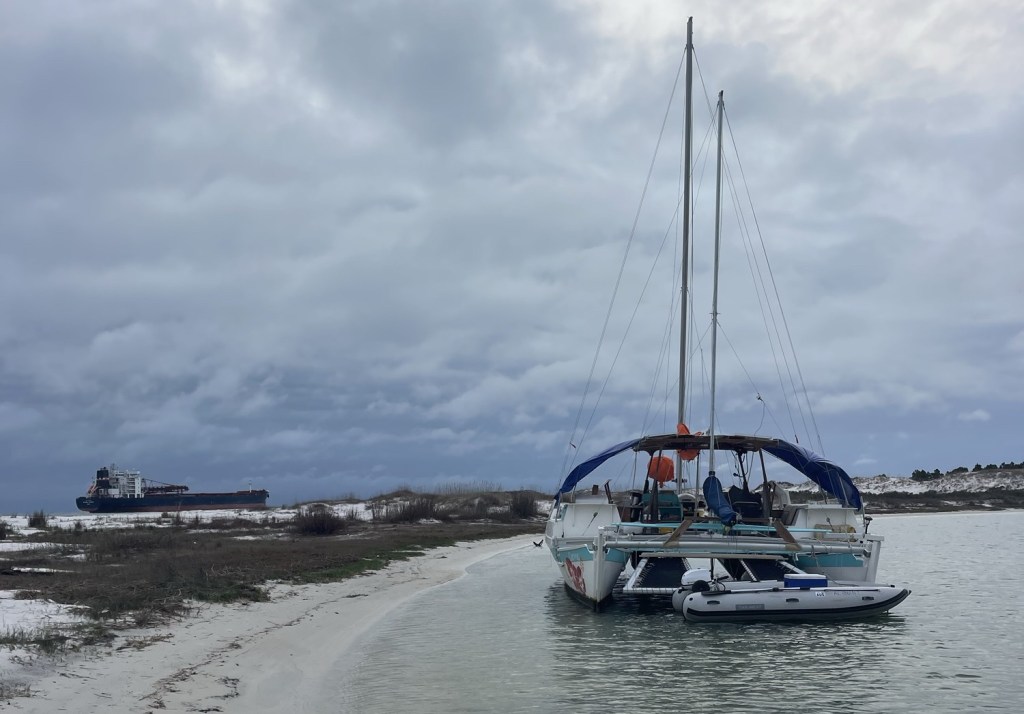
The next stop was Spectre Island, tucked into a skinny stretch of the ICW near Mary Esther, Florida. It’s a little jewel of a spot, with a delightful anchorage tucked in behind it—fully protected from weather and boat wakes, the kind of place that immediately makes you breathe easier once the hook is down.

While I was there, the fog rolled in and it stayed for days, all day. Visibility dropped below a hundred feet at times, and it’s remarkable how claustrophobic it feels to sit inside a cloud. Sound and light shrink down to almost nothing, and without any real reference points the world feels oddly unreal. It’s like being stuck in a dream you can’t quite wake up from, where everything is muffled and close and slightly wrong.

Barely Two Boat Lengths

Then, eventually, the fog lifts. The sky opens up and reveals blue again, and it looks impossibly bright, as if someone turned the saturation knob all the way up. The contrast is startling and wonderful, a reminder of just how much you’d been missing without realizing it. Moments like that feel like a small reward for moving slowly enough to be there when they happen.

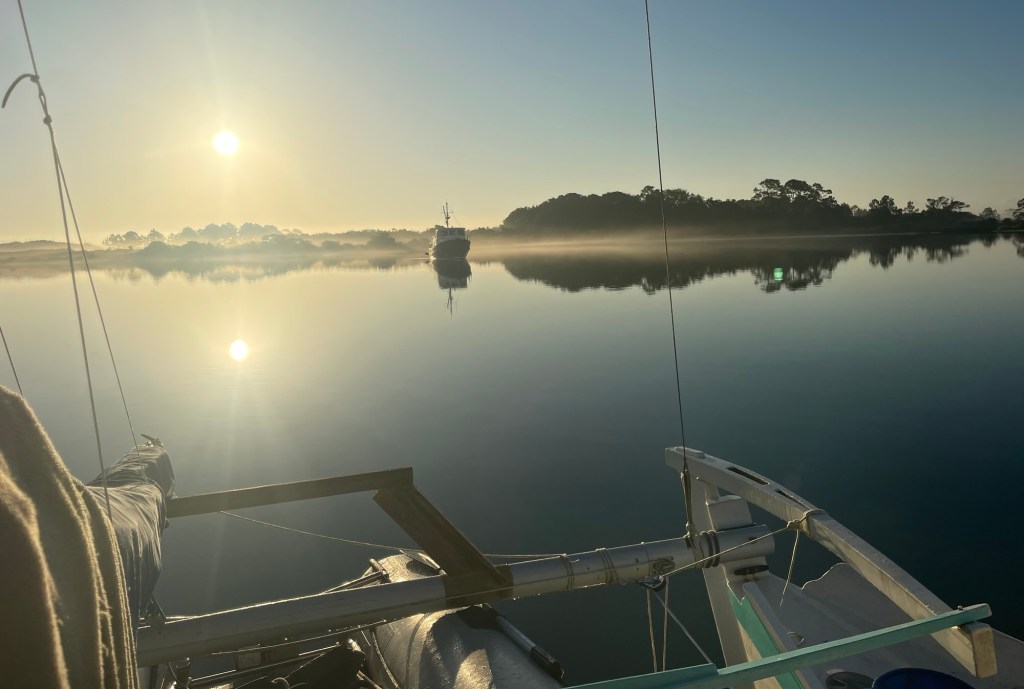
Not a Bad Way to Start the Day

I’ve still got a couple of days with wind gusts approaching 30 knots so I’ll remain here at anchor, watch the stingrays and herons, enjoy the surf sounds coming from the Gulf, and drink coffee and sip rum. After the front passes I’ll spend nearly a week getting to the clear emerald waters around Panama City Beach area, and do the same thing for a while.

Someone’s got to do it.

Categories: Journey Skills | Tags: , , , , , , | Leave a comment

Website Powered by WordPress.com.