Monthly Archives: December 2025

Making a Sailboat feel like Home

Comfort while living on a sailboat? It isn’t always about systems and hardware and equipment.

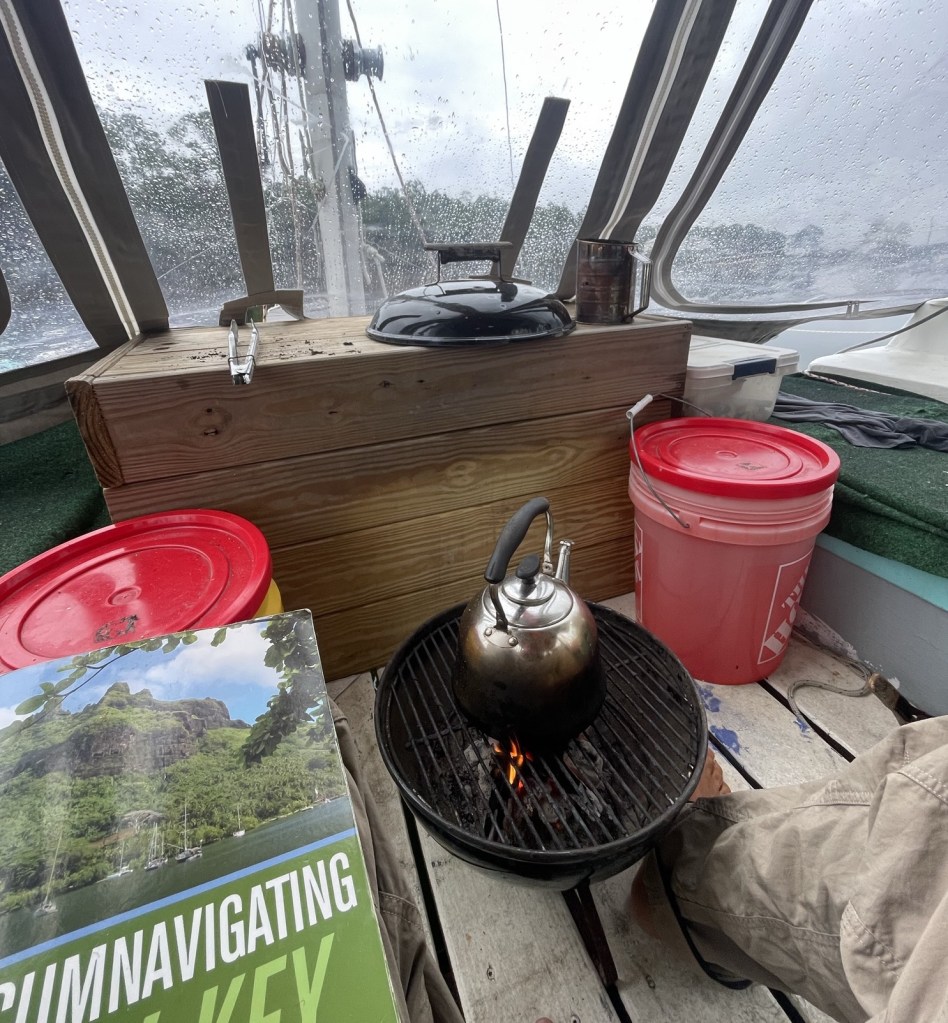
Cold, Wet Weather, A Warm Fire

For me, it is equally about ambience; music, a favorite drink, and maybe a fire in the Barbecue pit. These things add as much comfort, and a feeling of “home,” as all the other essential components.

That’s not to say a properly functioning nav system or a reliable engine don’t add peace of mind, but peace of mind isn’t exactly the same as comfort. Peace of mind is the absence of dread. Comfort, on the other hand, is the presence of delight.

The world of cruising is filled with people designing their way out of discomfort. They install water-makers and diesel heaters, inverters the size of microwaves, and enough LED lights to illuminate a football field. But the truth is, you can have every gadget a chandlery ever sold and still feel like you’re camping in a fiberglass container.

That’s where ambience comes in.

Can I Climb In Too?

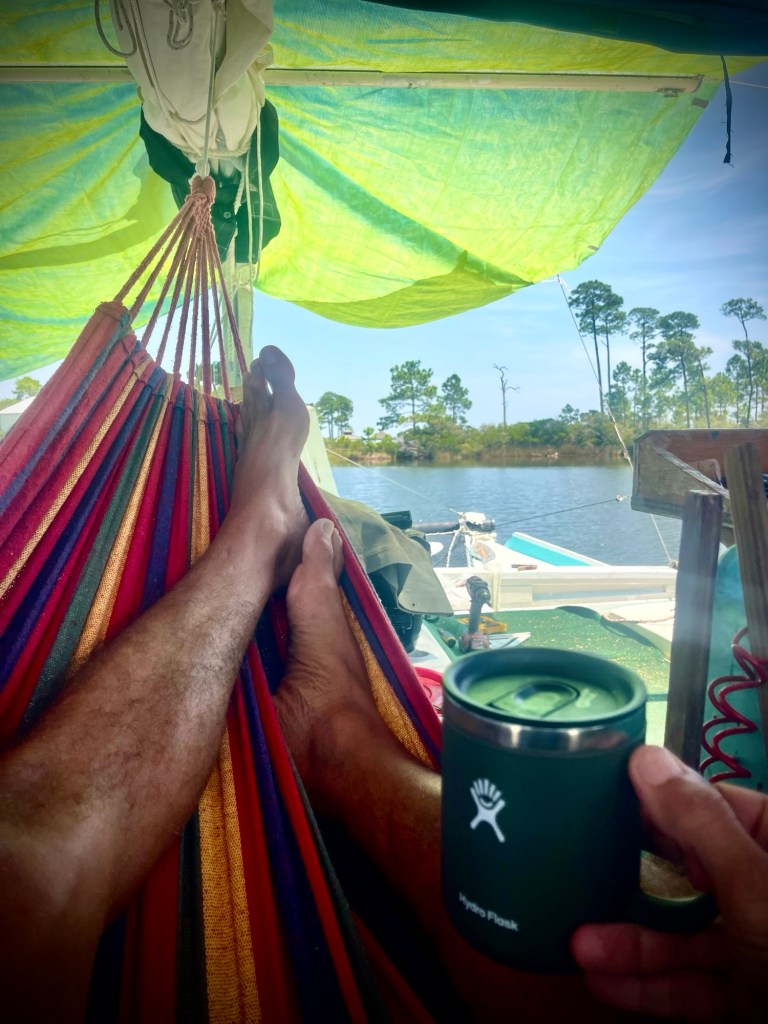
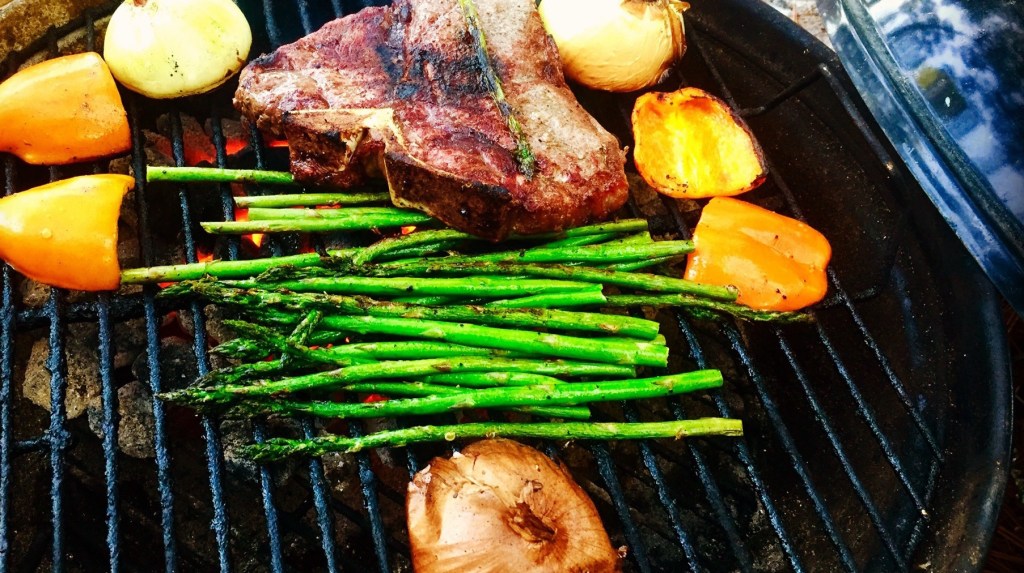
It’s the quiet things that make life aboard feel less like survival and more like living. For me, it’s the gentle swing in the hammock. The lingering aroma of a Weber BBQ grill still carrying the remnants of steak and onions,…and a cold beer.

The Myth of Equipment-Based Happiness

Ask any long term cruiser what they’re working on this week, and you’ll get a detailed answer involving pumps, tanks, or electrical wiring, and the occasional curse. They’ll speak of “projects” in the same tone that farmers use for “rain.”

Rarely does anyone ever say, “I’m trying to improve the mood.”

And I think that’s a shame, because the mood is what makes the boat feel like home. Comfort isn’t just about temperature or dryness; it’s about atmosphere. You can be cold, wet, and happy if the moment feels right. Think of sitting by a campfire with a blanket, or sharing a beer on a cold beach. The conditions may not be great, but the feeling is.

The Feeling Is Good

On the flip side, you can have all the modern conveniences—a diesel heater, running hot water—and still feel lonely, sterile, and vaguely uncomfortable. Although to be honest, as much as I love the spartan, camping style of life, I do get pangs of envy when visiting a friend’s boat with its huge covered living area.

Music, Memory, and the Sound of the Sea

Aboard a sailboat, music takes on a kind of sacred importance. It’s one of the few things that can transport you beyond the sound of halyards and the creak of anchor lines.

Some evenings, I’ll play old jazz or classical guitar, something that blends with the wind in the rigging. Other times it’ll be 80’s classics and I’ll get bowled over by nostalgia, followed by the realization of how old I’ve become.

The Ritual of the Favorite Drink

If sunsets are about ambience and music is about mood, then a favorite drink is about ritual. It doesn’t have to be fancy. I’ve an old sea kayaking mate who raved about his morning instant coffee and powdered milk. I don’t think he’s right in the head.

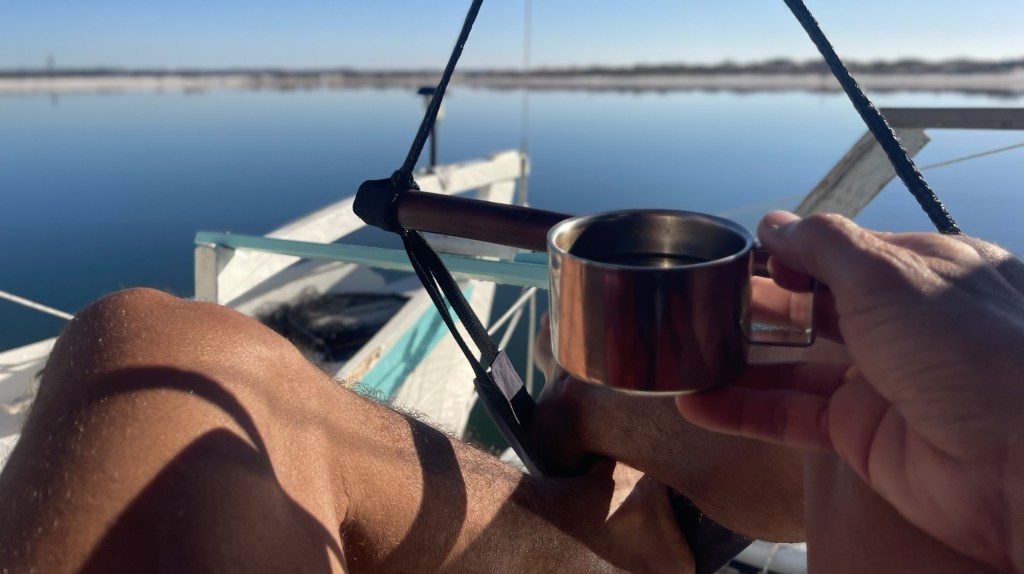
My favorite ritual involves a thermal mug and something brown—coffee in the morning, rum in the evening, and sometimes they’ll be in the same cup, I think it’s called a Marlin Spike. If there’s nothing of importance to be done for the day, I love the flavor mixture of a rich dark coffee with a splash of Rum with breakfast. It tastes kind of smokey and soft.

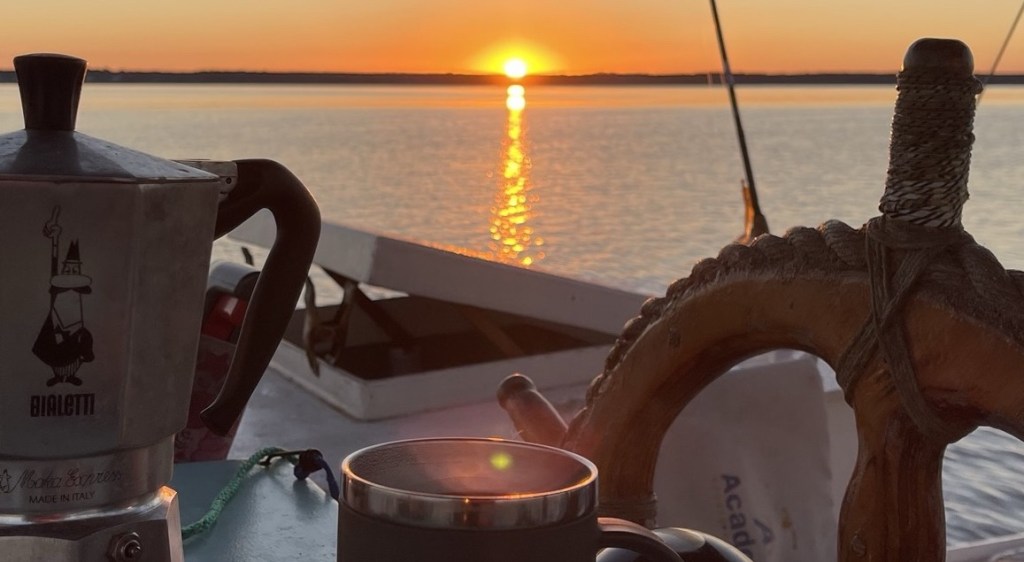
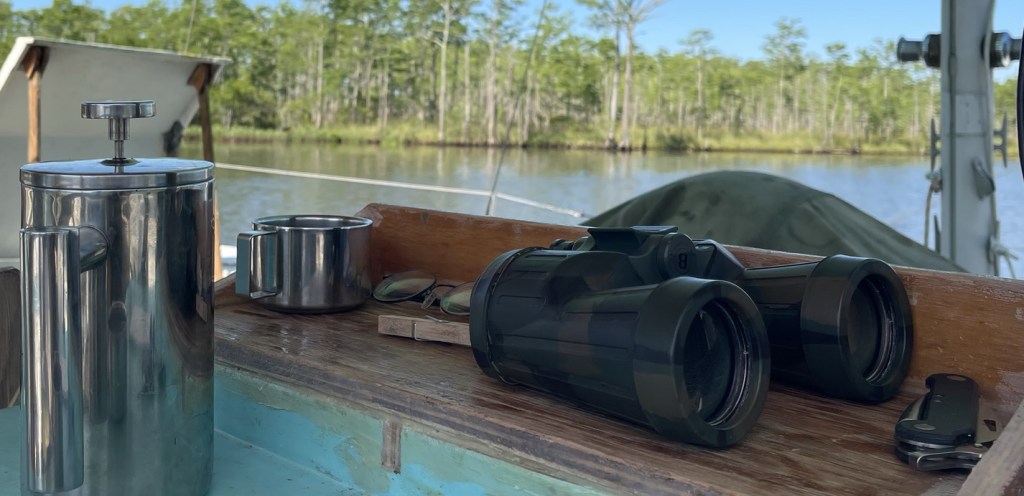
Each morning around the time of sunrise, I’ll get up, measure in my coffee grounds, boil the water, and load up my half liter French press. Stir the mixture, then push the plunger down on a slight angle so the lid doesn’t contact the layer of crema. Hold the lid off the coffee and shake the press as I pour to allow the crema to flow in and cover the cups contents. I know it’s wanky, but it’s something I’ve always done, whether back packing, canoeing, or sailing.

Morning Coffee

There’s something grounding about that small ceremony. It reminds me that while the sea, the mountains, or society may be indifferent, I don’t have to be.

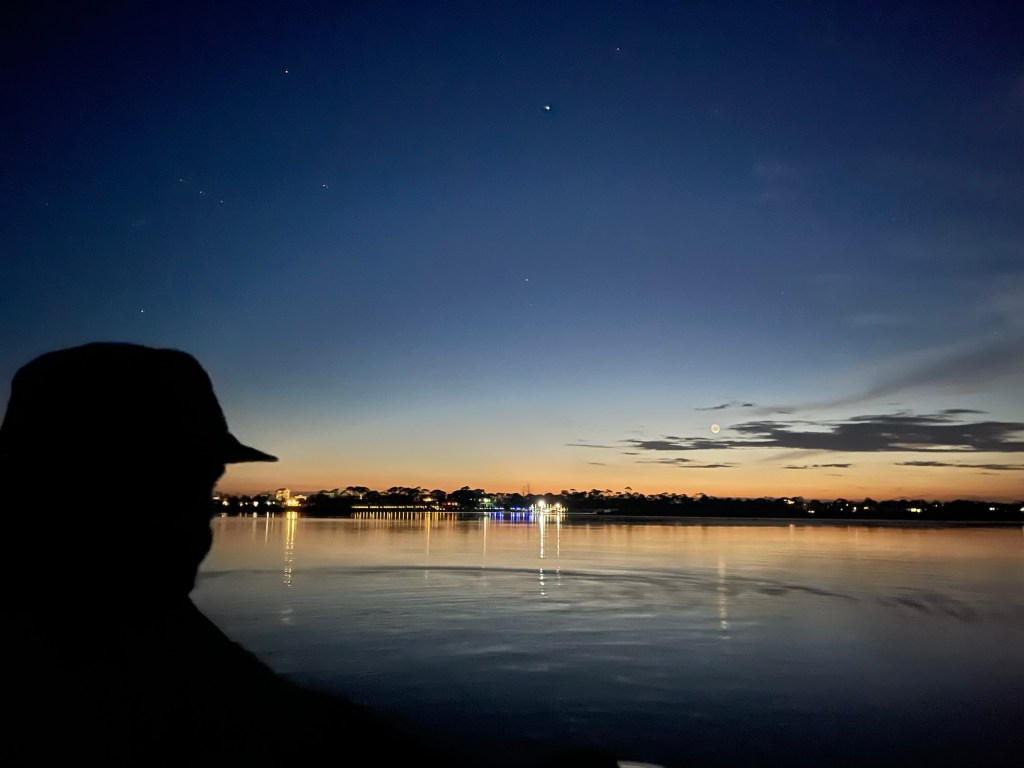
That first sundowner at anchor is always the best. It’s the transition point from doing to being—from being an active sailor back to a lazy human again.

The Wood-stove: Civilization in a Box

If you’ve never had a wood stove on a boat, you might think it’s overkill. If you have, you know it’s the difference between tolerating winter and enjoying it.

As yet I’ve not had one, but I have camped in cowboy style wall tents, small slab log cabins, and lean-to’s heated via a small wood stove. To say I loved that ambiance would be an understatement.

A stove does more than heat a cabin; it creates a sense of welcoming civility. Firelight softens hard edges, the smell of burning wood helps you forget about cold, wet, uncomfortable conditions outside. Even the act of cutting and storing a wood supply feels noble—like you’ve managed to domesticate the world itself, one stick at a time.

One afternoon, anchored in a quiet cove, I had the little Weber going on deck and food cooking on the grate, doing the slow, patient work that only time can finish. The tarp strung over the deck had the rain whispering against it with cold intent—not loud enough to interrupt thought, just enough to be felt. The air was thick with the mingled aromas of woodsmoke and lamb chops, that particular perfume of a camp shelter that announces you are dry, warm, and in no immediate hurry to be anywhere else. It really is one of my all time favorite situations to be in.

Perfect Feast

For a while, time stood still. My boat, Curious, was an isolated paradise. My cat had surrendered to the illusion, stretched out near the soft radiating heat of the barbecue, paws tucked, whiskers barely moving. There was no motion worth noting, no tide demanding attention, no clock insisting on relevance. There was no real schedule other than breathing.

I could have been anywhere—a cabin tucked away in the pines, a mountain hut waiting out a storm, or a small town cottage with nowhere to go and nothing expected. It was one of those small, unannounced moments when the difference between land and sea dissolves, and you realize that comfort, like home, is less about geography than it is about warmth, shelter, and a warming fire quietly doing its thing.

That’s the magic of ambience: it tricks the mind into comfort.

The Philosophy of Enough

Living on a boat teaches you to redefine comfort. For me it’s not about luxury; it’s about sufficiency. You start to realize that “enough” is a moving target—and that chasing more can lead to frustration.

I often dream of a bigger boat; B.B.S. The ability to have a center cabin between the hulls is a big attraction. I’m sitting here in the big open saloon of my friends Lagoon 40, writing away as the chilly rain is pelting down outside. I’m protected from the cold and wet. We’re at a dock with the A/C keeping the temperature just right. This kind of luxury does feel good, I admit, and I’m aware of it in the same way you notice weather you don’t expect to last.

James Wharram 35 foot Tangaroa

My 35 foot Wharram Tangaroa is a wonderful boat, but building a center cabin could start to look a little clunky if not carefully kept to quite a low profile.

Perhaps I could get something bigger like the Wharram Tehini, she’s 51 feet long, very wide with loads of room, and they look oh so very beautiful. I’ll just have to keep dreaming on.

James Wharram 51 foot Tehini

Though a bigger boat generally means bigger expenses, maybe I can find some sort of trade off. Meanwhile, I’m sipping rum beside the fire on Curious, perfectly content with my limited square footage and my flickering fire pit.

Comfort, I’ve learned, isn’t proportional to space or gear—it’s proportional to appreciation.

Weatherproofing the Mind

Being constantly on the water has a way of testing your mood. There are days when the wind howls, the rain comes sideways, and every place onboard feels vaguely damp. On those days, ambience feels more like survival strategy.

You learn to create small islands of comfort in a sea of chaos. Watching a movie curled up under fluffy blankets, a hot cup of something, and a bit of light. Even humor becomes a kind of shelter.

Fluffy Blankets ~ Happy Cat

As John Gierach once wrote, “The solution to any problem is to go fishing, and the worse the problem, the longer the trip.” Substitute “fishing” with “dropping the anchor and pouring a drink,” and you’ve got the sailor’s equivalent.

Comfort Is a Choice

In the end, comfort on a Wharram sailboat isn’t a product of what you have—it’s a product of how you live. Anyone can buy gadgets; not everyone can cultivate atmosphere.

You can fill a boat with the best technology available and still be miserable. Or you can fill it with small rituals and simple pleasures and feel rich beyond measure.

It comes down to seeing the boat not merely as, ‘a thing’, but as a home.

Because when the anchor sets and the wind quiets, and you’re sitting there with fog drifting over the water ~ music humming, drink in hand, fire glowing ~ you realize that comfort afloat is less about escaping discomfort, and more about embracing contentment.

Reasonably Content

It’s not about perfection. It’s about presence.

And that’s something no amount of equipment can buy.

Categories: Journey Skills | Tags: , , , , , , | Leave a comment

Cruising Life on a Wharram

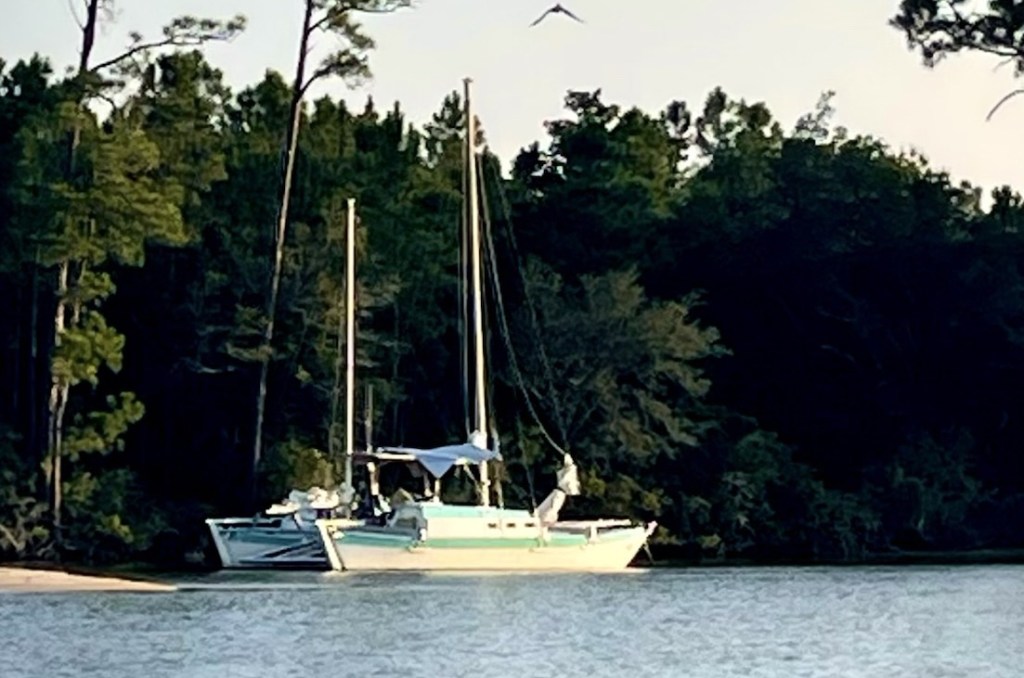
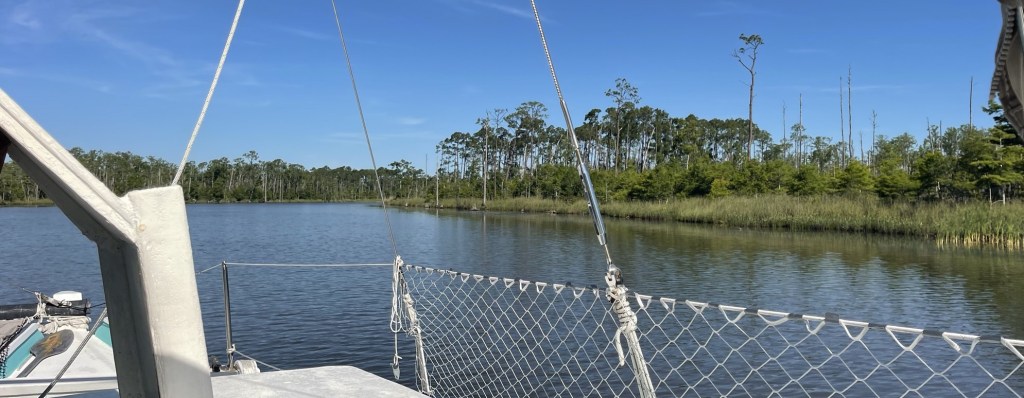
Long term cruising on a Wharram catamaran along the bayous and shallow bays of Alabama and the Florida Panhandle is an education in slow water, muted weather, and a patience shaped by tides you can almost—but never quite—predict.

Just Slow Down and Enjoy

Here, sustained north or south winds matter more than the tide tables; blow long, and hard enough and they physically pile water into the bayous or drain it back out. More than once, the wind has rewritten the day’s expectations, leaving channels and mudflats much shallower than expected. At least that’s excuse I’ve used after my keels have kissed the bottom.

This is not the glamorous end of sailing, the blue-water fantasy sold in brochures and drunken stories. There are no real trade winds here, no flying fish, no tropical idyll. Instead, the water is green and opaque, the air heavy with insects, and the bayous are thick with baitfish. Which is precisely the point.

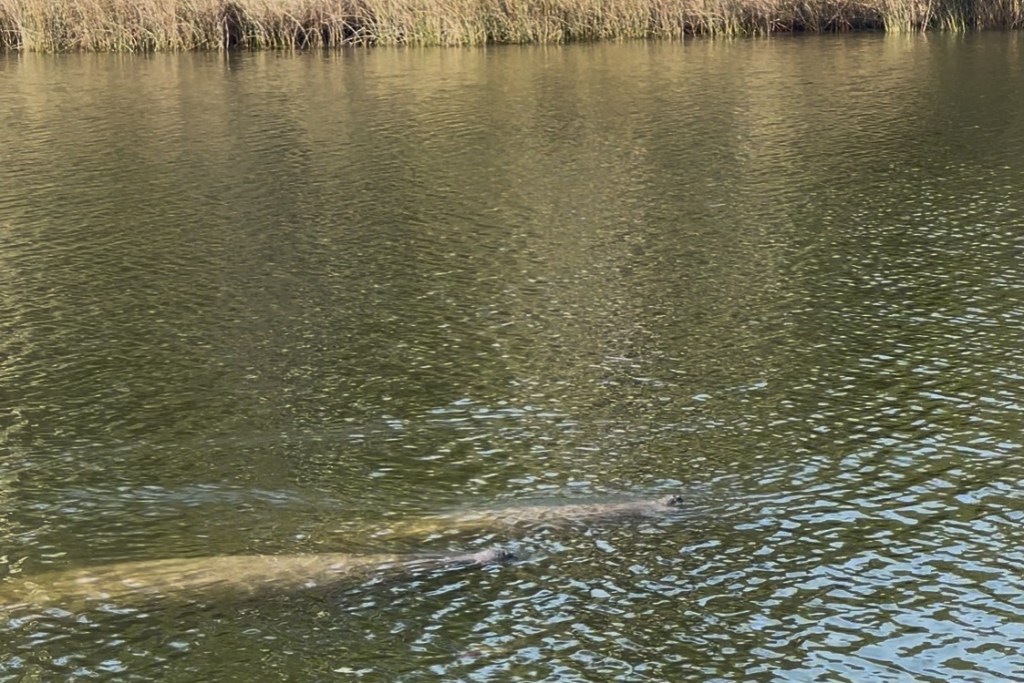
Manatees Just Hanging Out

The dolphins understand this better than anyone. They come not for the scenery but for the economics of it. Food gathers here, and where food gathers, predators follow. I’ve watched dolphins catch a fish, toss it into the air, chase it down, catch it again, and throw it once more—not out of cruelty, exactly, but because they can. It looks playful from a distance, the way all nature does,… when you’re not the one being played with.

From the boat, it’s entertaining in a quiet, passing way, something to watch while the kettle boils or the tide turns. The fish, I suspect, would describe the experience differently.

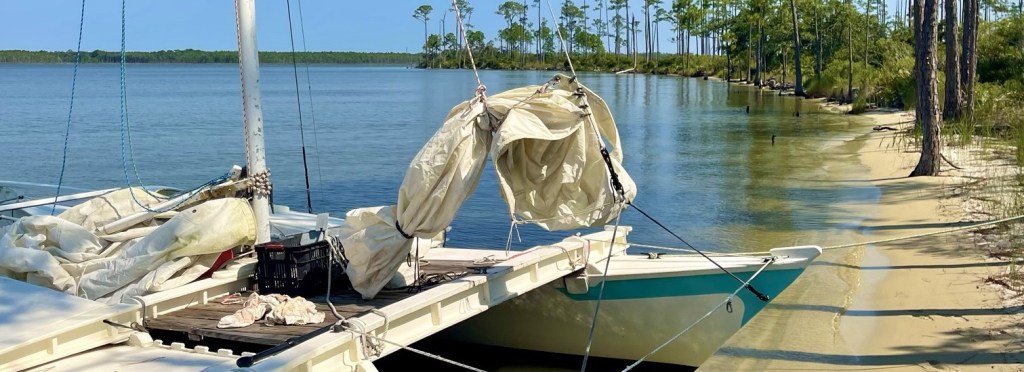
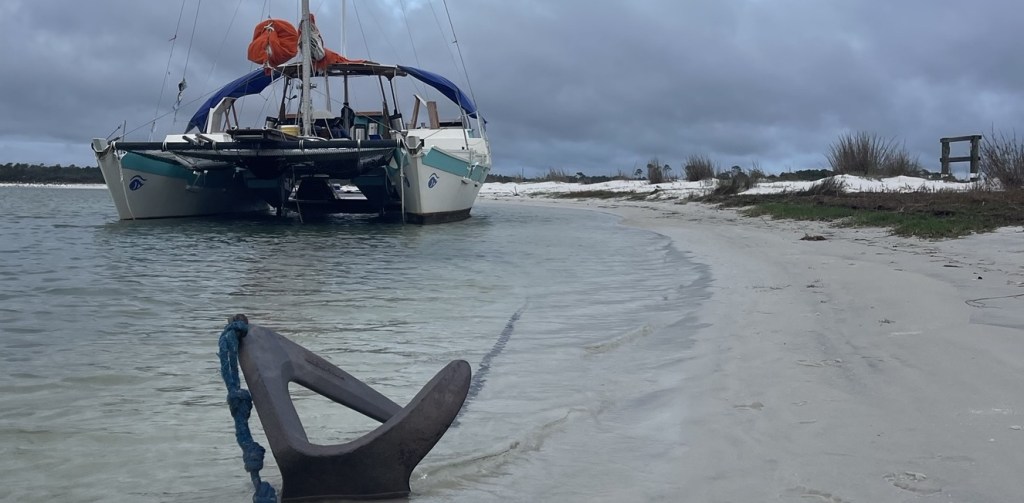
A Wharram doesn’t demand attention. That is perhaps its greatest virtue in these waters. It sits lightly on the water, almost politely, in places where deeper draft boats fear to go. With its narrow hulls and shoal draft, the boat invites exploration rather than concern. You can sneak into creeks that look too small to matter, glide over shallow sand bars, and anchor in water skinny enough to watch crabs and stingrays searching for food.

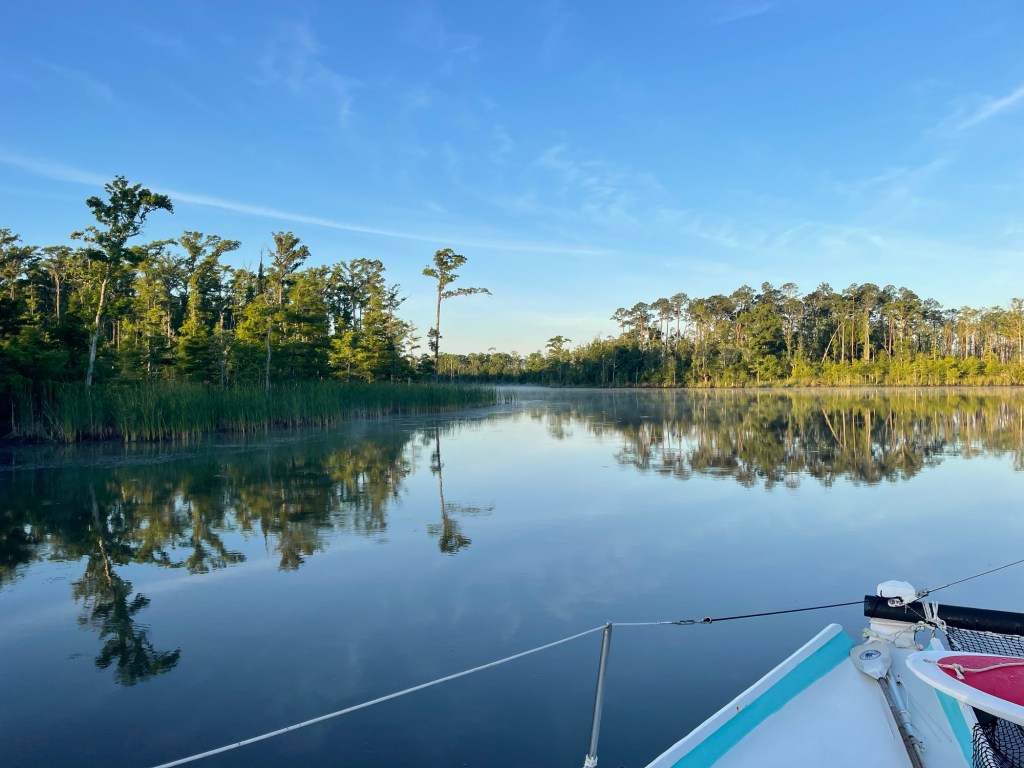
A Very Quiet Anchorage

The Alabama and Florida Panhandle coast is a quilt of environments stitched together by tides and tannin-stained water. There are open bays that feel deceptively spacious until a northerly wind kicks in and turns them into a bouncy, angry washing machine. There are parts of bayous so delightfully serpentine they wrap around you like a hidden path, and the occasional disdainful heron will squark loudly because you got too close. There are the barrier islands, low and sandy, that on one hand appear so very fragile and on the other they’ve stopped the entire ocean dead in its tracks for thousands of years. A Wharram makes sense in all of it—not because it conquers the environment, but because it cooperates with it.

In summer, life aboard starts early, mostly because the heat insists on it. In winter the sun rises sharp and clear, and by midmorning the cabin is already warm enough to encourage activity. The Wharram’s accommodations are famously simple—some would say spartan—and that simplicity becomes an asset here. There is little to manage, little that can break, and nothing that requires shore power to feel “normal.” You wake with the dawn light, make coffee on a stove that doesn’t care where you are, and sit on deck watching the water change color as the sun rises. There is no rush, because nothing in these waters moves quickly except storms, and they provide a little advance notice.

Wide Open Shallow Waters

Anchoring becomes an art form. Not the deep-water, chain-and-scope arithmetic of offshore sailing, but the careful judgement required in shallow bays with soft bottoms and shifting winds. A Wharram rides easily to anchor, rarely sheering, and draws so little that you can often anchor where deep draft monohulls wouldn’t consider stopping. This opens up opportunities invisible to most cruisers: little side bays, dead-end creeks, the backsides of barrier islands where the sound of the Gulf is just over the dunes. You learn to read the bottom by its color, to trust your eyes more than your electronics, and to recognize the subtle difference between mud that will hold and bottom that will simply shrug and let go.

Weather governs everything. Summer brings heat and thunderstorms that rise out of nothing and flatten the world for an hour or so before moving on. You learn to reef early—not because you need to, but because it makes life easier—and to set awnings and sunshades as soon as possible after the anchor drops. The Wharram’s open structure helps; breezes move through the boat instead of being trapped inside it. Nights are a study in contrasts: heavy air, chirring insects, the click, clack, and snap of shrimp sounds through the hull, and stars bright enough to make you forget about air conditioning entirely.

Magical Nights

Winter, by contrast, is crisp, cold and often beautiful, but less forgiving. Strong northers blow down the rivers and across the bays, pushing water out and leaving docks with surprisingly little water around them. Here again the Wharram excels. Its light draft means you are rarely left high and dry unless you choose to be. You can tuck into creeks for protection, nose into the backwaters where the wind dies completely, and wait out the blows with relative comfort. You become intimately familiar with cold mornings, condensation, and the quiet satisfaction of a hot breakfast eaten while the world outside shivers.

Provisioning is part of the rhythm. Grocery stores appear intermittently, often far from available docks. Living on a Wharram encourages modest needs: fewer things, better choices. You carry what you can realistically store and accept that fresh vegetables are a treasure rather than a guarantee. Fishing fills some of the gaps—not romantically, but practically. Speckled trout, redfish, the occasional flounder if you are lucky and patient. Meals become simple and satisfying, shaped as much by what the water offers as by what simple stores I can carry.

Simple Food Supply

The social world is small but memorable. Along these pieces of coastline, people notice a Wharram and often ask questions. It looks different, unapologetically so, and it invites conversation. Fishermen idle over to ask what it is, how it sails, where you came from. Some are skeptical, others enthusiastic, but nearly all are curious. There is a sense that anyone choosing to live this way must either know something important or be slightly unhinged. Often, it’s a combination of both. Marinas are rare, and when you do tie up, you are treated less like a transient customer and more like a temporary resident with an interesting story.

Solitude, though, is the dominant feature. Days, occasionally even weeks, pass without speaking to another person. You learn the sounds of the place: the low thunder of distant surf on the barrier islands, the hiss of wind through spartina grass, the outboard engines whining faintly miles away. There is a humility in this isolation. The land here is not dramatic in the way mountains are dramatic, but it has weight. It changes slowly and remembers everything. Living on a Wharram, you float lightly across it, an observer more than a participant, tied to nothing but tides and weather.

Not a Bad Place to do Maintenance

Maintenance, such as it is, fits the scale of the boat and the environment. Salt still corrodes, sun still punishes, but the systems are few and accessible. Wood, rope, and simple hardware age honestly. You sand, paint, replace, and move on. There is satisfaction in knowing every part of your home, in understanding how loads affect the way the boat moves, how water finds its way in, and how to persuade it back out again. A Wharram doesn’t demand perfection—only attention.

The shallow bays and bayous reward curiosity. You start exploring places with no names, or names that exist only on paper charts. There are afternoons spent drifting with the current, sails down, letting the boat slide quietly past marsh grass and oyster banks. Birds become neighbors: ospreys watching suspiciously from channel markers, pelicans gliding past at arm’s length, herons lifting reluctantly as you pass. These moments are small, easily overlooked, and completely absorbing. They are the currency and markers of this life.

Storm preparation is taken seriously, but not dramatically. You learn the patterns, the safe pockets of protection behind islands, the places that offer protection from surge and wind. The Wharram’s lightness is again an asset; it doesn’t fight the water so much as dance with it. Lines are secured, anchor’s checked, and you settle in to wait. When storms pass, the world feels scrubbed clean, rearranged just enough to remind you who is in charge.

Very Humbling

Living aboard in this region teaches restraint. You don’t push schedules, don’t force passages, don’t pretend the weather will cooperate because you want it to. The Wharram reinforces this mindset. It sails best when allowed to do its own thing, when trimmed gently and not pressed. In return, it rewards you with easy shallow access, and a sense of being exactly where you belong—even when that place is an unnamed bend in a bayou with mosquitoes thick enough to darken the air at sunset.

Perhaps the greatest gift is perspective. From the deck of a small, simple catamaran, the Alabama and Florida Panhandle coast reveals itself as a working landscape, not a resort brochure. Shrimp boats leave before dawn, and bridges loom overhead, all are indifferent to your passage. Shorelines change from wild marsh to modest towns without ceremony. You are close enough to see the details, far enough removed to avoid being entangled by them.

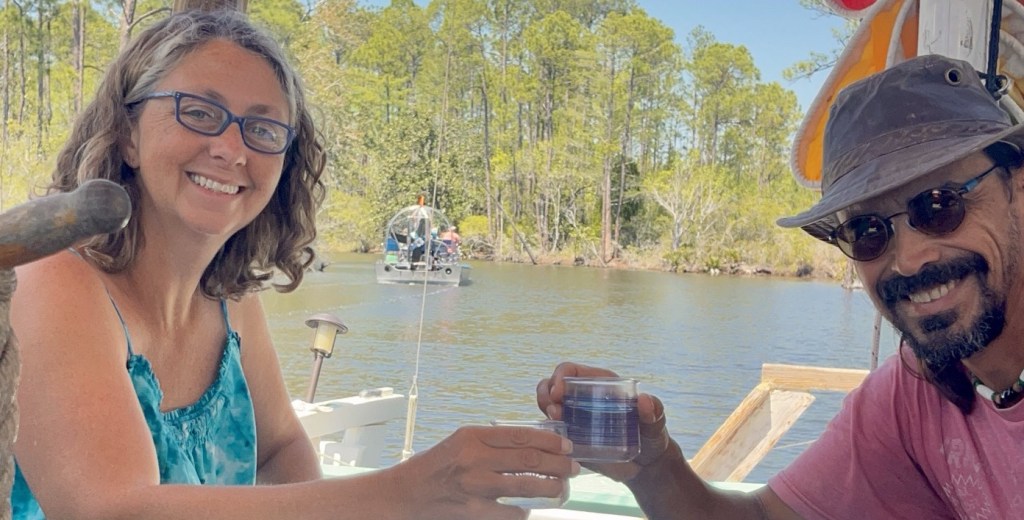
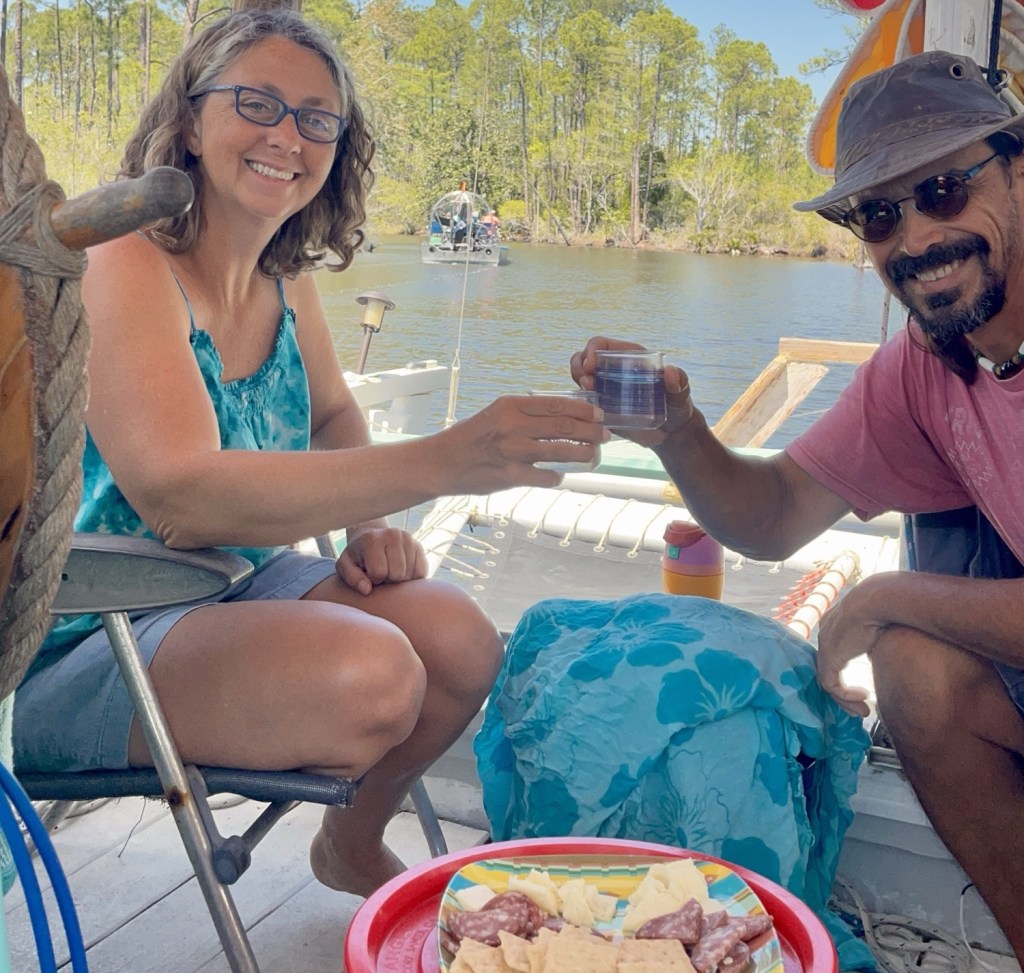
Cheers

In the end, living on a Wharram catamaran here is less about adventure and more about alignment. The boat fits the place, and the place fits the pace. It is a life stripped of excess and rich in observation, where days are measured in tides and light rather than miles covered. You move slowly, live lightly, and learn—over time—that this quiet corner of the Gulf Coast has more to offer than it first appears.

Categories: Journey Skills | Tags: , , , , , , | Leave a comment

The Call of Small Adventures

Not every adventure needs to be an expedition around the world.

The most meaningful journeys can often happen just a few miles from home, in a local river or dam, a sheltered bay, or along a winding coastline. Packing your gear into a canoe, dinghy, kayak, or small sailboat and heading out for a night or two under the stars offers a way to taste freedom without the need of a large boat and a limitless budget.

Small Boat ~ Big Adventure

The beauty of micro-adventures lies in their scale. You don’t need months of planning or complicated logistics and you certainly don’t need to cross oceans. You simply need a small, reliable craft of some sort, a bit of gear, and the willingness to follow your compass and chart toward a campsite. Small boat camping exists in the space between exploration and simplicity. Ordinary becomes extraordinary the moment you untie a rope and move away from the dock. That first interaction with a creature from the deep will be imprinted in your memory forever.

Why Small Boat Camping?

1. Freedom Without Complexity

Large boats come with large expenses, bigger responsibilities and planning, and greater ongoing maintenance. Alongside this is the fact that if something significant goes wrong out on water your options for doing on the run repairs can be quite restricted.

On the other hand, a small boat offers spur of the moment adventures. You can launch quickly, navigate skinny, shallow waters, and slip into hidden coves where larger boats can’t follow. With less to manage, the focus shifts to the essence of adventure—exploring, camping, cooking outdoors, and immersing yourself in nature.

A Quiet, Secluded Beach close to Suburbia

A wonderful bonus is that nature will often come very close to you personally, we’re talking within an arms reach. Maybe a minnow or stingray, dolphins or sharks, or even a pelican or heron landing on the deck of your sea kayak, all of which has happened for me. I can also attest that having something breach the surface from below, or have an Osprey or Pelican drop a surprise dive bomb on a fish, right beside you will have your heart racing for while!

2. It’s Affordable and Accessible

Camping from a small boat dramatically lowers the barrier to entry. You don’t need deep pockets to experience a night floating at anchor beneath the stars or camping on a lonely shore gazing into the embers of your cool fire. An inflatable dinghy, a kayak, or even a modest secondhand sailing dinghy can open the door to adventure based experiences that are far richer than their price tag suggests.

3. The Blend of Two Worlds

Camping and boating are combined. By day, you’re navigating over waterways, dancing with the wind in your sails or feeling mesmerized by the rhythm of the paddle in your hands. By night, you’re pitching a tent on a beach all to yourself or sleeping at anchor aboard your boat being lulled sleep by the gentle rocking. It’s can be the intimate union of land and water adventures— half land based campsites, half sea voyage.

A Huge Adventure from Long Ago

The Magic of Scale

Thinking of great adventures, we often imagine climbing dazzling peaks, traversing through deserts, or crossing vast oceans. Yet there’s a certain magic in realizing you don’t need to scale Everest to feel wonder. Spend one night on a small island, watching the tide rise and fall as the stars above you move across the sky, it can feel just as epic.

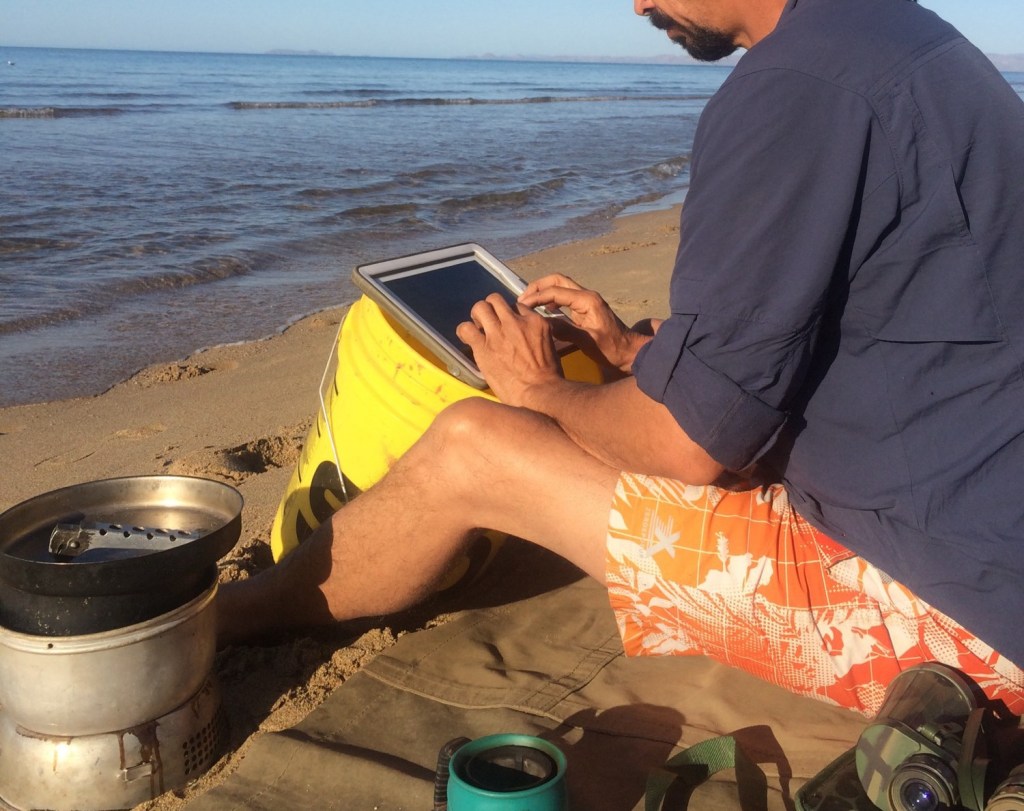
Small boat camping thrives on scale not measured in distance covered, but in experiences collected. The sound of an owl hooting from the tree-line, or a curlew crying out nearby on the beach. Water lapping against the hull as you fall asleep. Cooking your evening meal on a campfire with nothing but the night for company, then enjoying your smoke infused morning coffee as the sun rises.

A micro-adventure is proof that you don’t need more; more miles, more gear, more expense. Simply to pay attention to what’s already available in your own backyard. You’re ‘somewhere nearby’ is someone else’s exotic location.

Preparing for a Micro-Adventure

Part of the joy of small boat camping is how little it takes to prepare. But preparation is key, and done well, it ensures safety and maximizes enjoyment.

Choosing Your Boat

Sea Kayaks, River Kayaks & Canoes: Lightweight and portable, perfect for lakes, rivers, and calm bays, and of course, coastal cruising.

Inflatables & Dinghies: Versatile, affordable, and easy to transport.

Small Sailing Dinghies: Harnessing the wind offers both sailing fun and a floating platform for camping.

Small, but perfect for Adventure

The boat you choose depends on your waterway and your comfort level. Some adventurers thrive on the effort put in to paddle a kayak or canoe, while others enjoy adjusting the mainsail and dancing with the wind.

Essential Gear Checklist

At its heart small boat camping doesn’t demand much, although a few essential items go a long way:

Dry bags for keeping gear safe.

A lightweight tent or tarp if camping ashore.

Sleeping bag and pad for warmth.

Portable stove and a compact cook kit.

Food and its containers

Headlamp, water filter/supply container, and basic first-aid kit.

Navigation essentials—map, compass, or GPS.

Planning the Route

Start small.

Aim for one and two night trips on local waters with undemanding waters. Identify various potential camp locations ahead of time, whether it’s a sandy beach, a designated campsite, or a quiet protected bay. Keep your initial distances manageable, read short, and plan to end each day with at least a few hours of daylight. Learning the process of loading and unloading your gear, where it lives, how often it gets used and in what order it is packed is a huge part of this new adventure based lifestyle.

Only Two Miles, but a World Away

To ensure the journey is enjoyable, and not exhausting, I’ve always recommended breaking your first days into two, three, or even four short segments with potential campsites at each segment. This provides the choice of pushing on if it feels good, or staying put and enjoying moment if you’re tired.

Stories from the Waterline

Small boat camping is less about theory and more about experience.

Picture this:

You push off from the dock late in the afternoon, the sun dipping toward the horizon. Your gear is neatly stowed, dry bags and equipment safely secured, and a small cooler at your feet. The paddle dips into the water with a satisfying rhythm, or the sail fills gently pushing you onward, and already you feel the grip of ordinary life loosening.

An hour later, you nose the bow into a quiet cove, or on to a lonely section of beach. You drop your anchor or pitch your tent, and by the time the sun fades from view you’re sitting cross-legged by your camp stove, steam rising from evening meal with a cold beer in hand. Fireflies dance through nearby branches. Over the water, a pelican glides by into the twilight, wing tips inches off the water.

Big boats Can’t Get Here

It may not be a grand expedition, but in that moment, you are experiencing the real world and feeling utterly alive.

The Joy of Solitude

Small boat camping steps you away from the noise of our modern world. Even if you’re just a few miles from town, the water acts as a natural boundary between you and the chaos of daily life.

In your solitude, you notice details that are often missed: the pattern of ripples in the current, the call and movements of the night creatures, the smell of salt or pine hanging the air. You realize that contentment doesn’t come from more possessions, it comes from fewer distractions.

Shared Adventures

Small boat camping need not be solitary. A group of friends, each in their own craft, each on their own journey, come together at the evenings campsite. Boats can be rafted together to become a platform for storytelling, laughter, and shared meals. The intimacy of small boats encourage closeness. You can be separated by cabins and decks, yet still gathered side by side, trading stories over simple meals and shared star light.

Lessons from the Water

Each trip, no matter how small, teaches something.

Cooking with limited gear demands resourcefulness, making do with what you packed. Waiting out weather or tides, and learning to adjust to conditions requires patience you have no choice in.

Dealing with the discomfort of mosquitoes and bugs, or a sudden rain squall, and realizing you can handle it all, develops resilience. The sheer privilege of floating on the water, of having a patch of earth to camp on, of having the freedom to do these things can be a profound lesson in gratitude.

These lessons will make their presence felt in life ashore as well. Small boat camping becomes more than mere recreation, it develops a mindful practice of living deliberately and simply.

The Environmental Connection

Spending time afloat reminds us that water is not just scenery, but a fragile, living environment and worth protecting. Camping from a boat you’re often in places less touched by human hands, places where your presence has an immediate impact and we must tread lightly.

If you bring it in with you, take it back out with you.

Try not to disturb the wildlife too much.

It Could Be Just Around The Corner

Respect the intertidal zones and fringing vegetation.

Small boats have a small footprint, but even small footprints matter, and enough of them can have a big impact. The more we respect our waterways, the longer they will endure for others to enjoy, and more importantly will allow the natural world to do its own thing.

Micro-Adventures as a Lifestyle

The increasing popularity of “van life” is showing that mobility and simplicity is being valued more and more, and small boat camping is its aquatic cousin. Both concepts reject the idea that you need great excess to feel alive. Both concepts thrive on minimalism, resourcefulness, and the joy of small spaces.

Micro-adventures by water allow you to turn weekends into stories, shorelines into personal discoveries, and a modest boat into a vessel for freedom. It’s not about where you go, it’s about how fully you experience it.

The Joy Is Waiting

You don’t need a big yacht capable of crossing oceans in luxury. You don’t even need months of preparation. Good situational awareness with an eye to the weather and basic navigation can carry you around the corner to an unexplored, by you, location. All you need is a small boat, a sense of curiosity, and the willingness to push off into the unknown—whether that unknown is just around that next bend in the river, across a quiet bay to a new island or a lonely piece of beach.

A Simple Journey Boat

The joy of small boat camping is not in the distance traveled but the immersion in the experience, the simplicity, and remembering that life’s greatest adventures can often come in the smallest of packages.

So, next time the weekend arrives and feel the water calling, grab your boat, pack some gear, and just go.

Your micro-adventure is waiting.

Categories: Journey Skills | Tags: , , , , , , , | 1 Comment

Website Powered by WordPress.com.