Journey Skills

Midnight on the Water

A quiet midnight trip home turns into a reminder that the world still hums along perfectly well without our supervision.

Out there, alone on dark water, the line between comfort and unease gets beautifully thin.

Night Time Beach

The boat I was using that evening was a Wharram Tiki 21 propelled by an electric trolling motor. The motor’s not fast, and it’s certainly not impressive, but it’s reliable and — most importantly — quiet. The kind of quiet that feels intentional, as though we were trespassing on something delicate. I eased the throttle forward and the boat began to slide away from the dock without so much as a ripple, and I thought: this is what a cat must feels like wandering around at night.

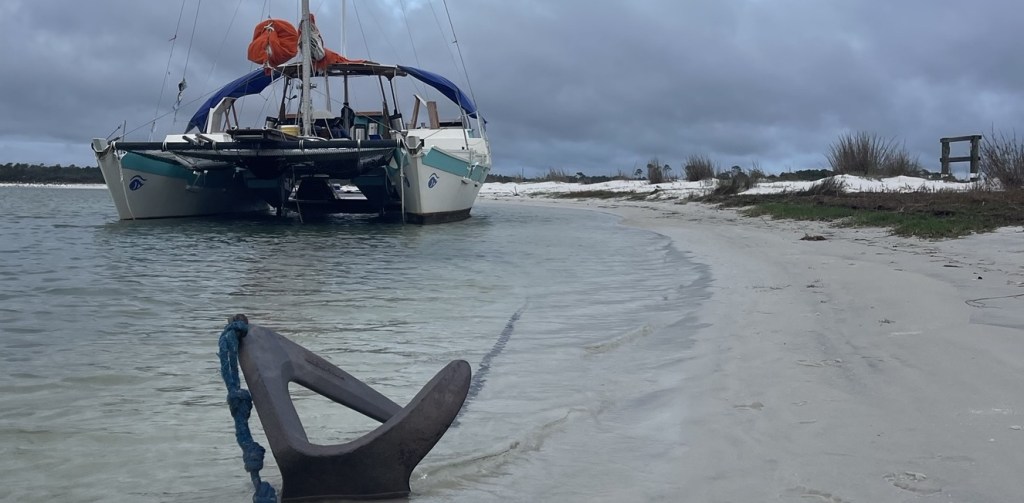
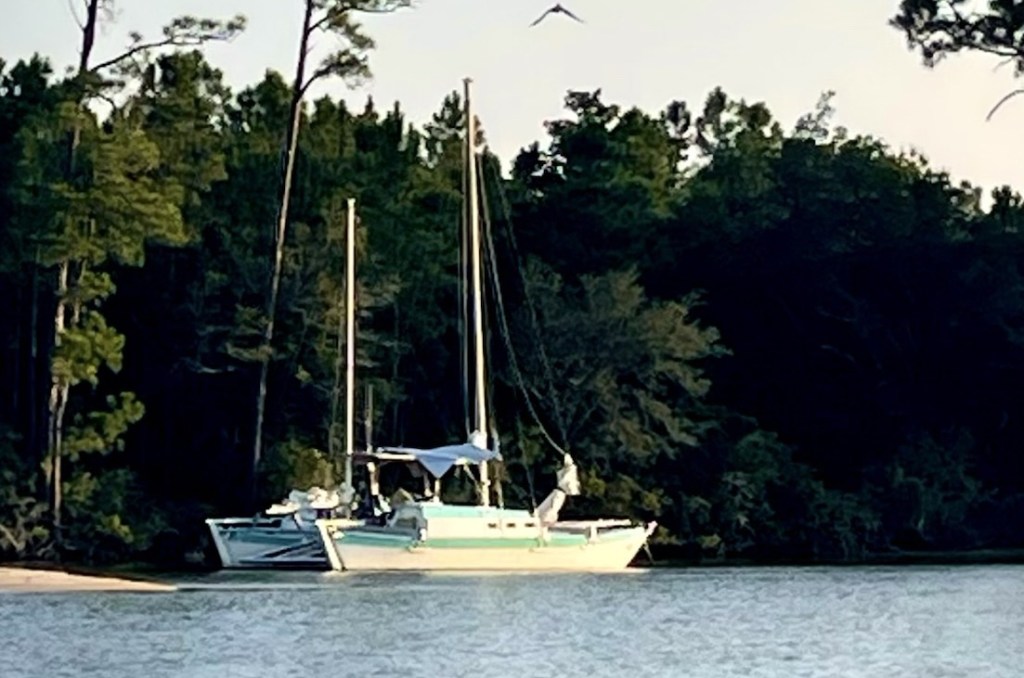
Coming back from dinner with friends the other night, I ended up returning a little later than expected — close to midnight. I hadn’t planned on staying that long. Dinner had that pleasant, lazy rhythm that tends to stretch out when the stories are good, the food is better, and nobody’s checking their watch. We weren’t solving the world’s problems — as people tend to do after a couple of drinks — just talking about them. By the time I got back to our Tangaroa 35 catamaran ‘Curious’, the moon was well up and the water was pitch black.

A few minutes into the trip, I turned off the running lights. Not because I was trying to be rebellious, but because I wanted the dark to swallow me whole. The world immediately changed. The reflections disappeared, the shoreline melted away, and I was left floating in a kind of soft, liquid darkness.

Then, the sounds began.

Sneaky

The water started speaking in tiny languages — clicks, splashes, swirls. Every one of them sounded personal, like a conversation I wasn’t invited to but was close enough to overhear. A fish would strike at the surface with a quick smack, and another would follow with a smaller, less confident version. The whole scene was alive with commotion, both violent and peaceful at the same time.

It struck me that this sort of experience is becoming rare. Most people, even those who live near the water, never really hear it. The background hum of convenience equipment, boat engines are getting ridiculously huge and most waterfronts glow like carnival rides. But there I was, in the dark, traveling at the pace of a slow thought, listening to life happen around me.

The shoreline houses were dark and respectable, the kind that tuck themselves in early. A few porch lights burned like lazy fireflies, and every now and then a motion sensor would flick on — probably because some nocturnal creature had wandered into a suburban security zone. It’s a very “end-of-the-road” sort of neighborhood, the kind where people move to get away from things, and then realize there’s not much left to get away from.

The Dark World

In the glow of a few submerged dock lights, the water took on that eerie aquarium quality — lit from below, with shadows moving through layers of green. The small ones zipped through like nervous commuters, darting in and out of the light, while deeper down larger figures glided through with a kind of ancient patience. I caught sight of something that looked about two feet long, moving slow and deliberate, a shadow that didn’t care about being seen. There’s a hierarchy down there that we only ever glimpse, and I had the distinct impression that most of the sub aquatic residents were avoiding eye contact.

Out past the lights, the black water shimmered with sound. You couldn’t see the surface, but you could hear the stories it was telling — somebody feeding, somebody fleeing. Life and death happening right there beneath me, entirely unbothered by the human world’s sense of importance.

The trees along the shore played their own part in this dark theater. Their moon shadows stretched across the water, long and ghostly, swaying with the light breeze. Every so often, a branch would move in a way that felt intentional, and I’d catch myself staring too long, wondering what exactly was watching whom. Then a bird — usually a heron — would launch from its perch and glide low across the water. When it passed close, it would let out a loud squawk, and every time it startled me just enough to be grateful for my mortality.

There’s something about being alone in the dark that resets the ego. You stop being the protagonist of your own story and start feeling more like background noise. The water doesn’t care what kind of day you’ve had. The fish aren’t interested in your ambitions or concerns. Even the moon seems vaguely amused that you’re still awake.

And yet, it’s oddly comforting — this reminder that you’re small, temporary, and entirely replaceable. People pay good money for mindfulness retreats to learn that. All you really need is a quiet motor, a moonlit waterway, and the nerve to turn the lights off.

From The Reeds

At one point I cut the motor and just let the boat drift. There was no wind, no current worth mentioning — just the slow rotation of the world and the tiny movements of creatures below. The hull made faint creaking noises when I moved, and occasionally something bumped against it, a polite knock from below that said, “You’re in my way.” I thought of all the times I’d been too busy to notice how alive the night really is, and how most of us mistake silence for emptiness. It’s not empty at all. It’s just occupied by things that don’t need to announce themselves.

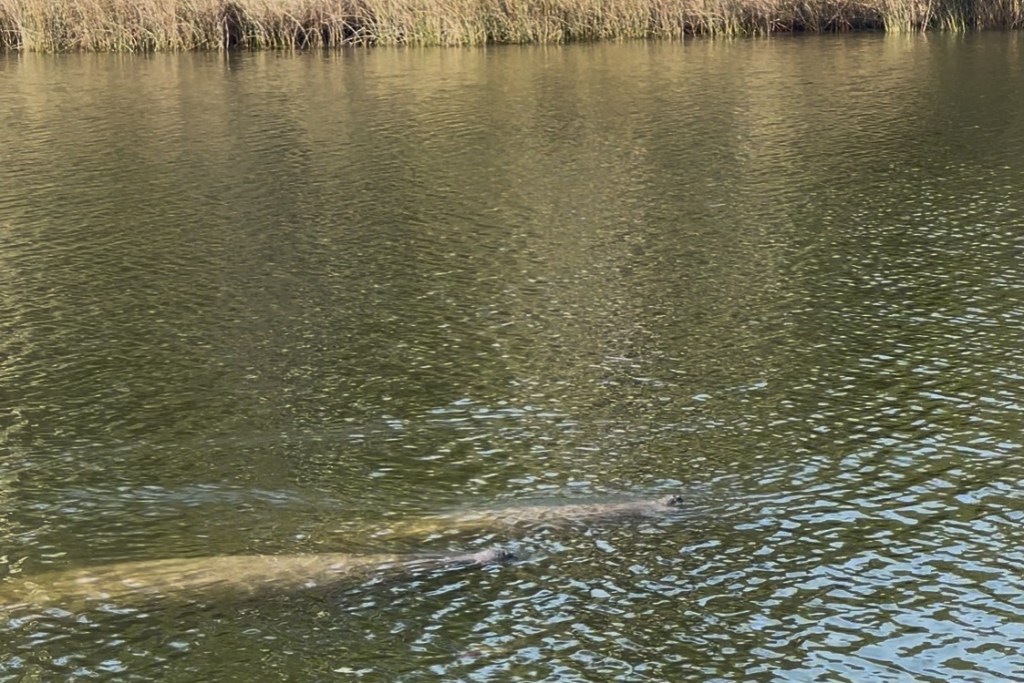
The smell of the water was stronger in the dark — that earthy mix of salt, mud, and something indefinably alive. Every sense gets sharper when you can’t rely on sight. The faint hum of insects, the whisper of reeds as creature pushes through, even the occasional splash of something heavy just out of view — all of it added up to a kind of music. Not the sort you hum along to, but the sort that fills you without asking permission.

It was around then that I started feeling the edge of that peculiar loneliness that’s equal parts comfort and unease. You know the one — when you’re the only human around for what feels like miles, and you can’t decide whether to feel lucky or mildly doomed. I was never in any real danger, but there’s an unmistakable awareness that comes when you realize nature could flick you off the map with less effort than you spend swatting a mosquito.

I began to think about how rare true darkness has become. Our modern world has been lit up so thoroughly that we’ve forgotten what it looks like without us. The stars overhead seemed almost relieved to have someone notice them. They were bright enough to cast a faint reflection on the water, little trembling echoes of light that looked like they were trying to climb back into the sky.

Somewhere in the distance, a mullet jumped, because that’s what mullet do — for reasons known only to themselves. A heron gave a single, exasperated squawk from the shoreline, probably protesting my presence. Every sound felt amplified and significant. It’s funny how, in daylight, we ignore half of what we hear, but at night, each sound feels like a clue to a mystery we’ll never solve.

Drifting there, I started thinking — as one does when given too much quiet — about how most of us spend our days surrounded by noise, filling every silence as if it were a gap in programming. Music, podcasts, the constant hum of engines and conversation. Out here, none of that applied. The night had its own rhythm, and it didn’t need accompaniment.

Night Anchorage

I remembered something a friend once said after his first night anchoring out alone: “You don’t sleep much the first few nights — not because you’re scared, but because you keep realizing how alive everything else is.” I understood that perfectly now. Out here, the water and the air trade secrets you can’t quite hear.

After a while, I turned the motor back on — just a whisper of thrust — and began to make my way home. The shoreline slipped by like a series of sketches: the faint outline of a dock, the dark silhouette of a mangrove, a forgotten buoy bobbing lazily. Every little thing looked more meaningful than it did in daylight, as if night were the original artist and daylight just the copyist.

As I drew closer to my boat, I passed through one of those underwater light zones again. The fish were still there, swirling in silent chaos. I slowed to a stop just to watch. It struck me how effortless their world seemed — dangerous, yes, but honest. Nobody was pretending to be something they weren’t. You eat or you’re eaten. You hide or you’re seen. It’s not a system built for comfort, but it’s fair in its own way.

A few minutes later, I reached my catamaran Curious. The deck boards creaked under my weight, the ropes strained a little, and the familiar smells of wood and ropes met me. The house lights in the distance looked warm, civilized, and slightly out of place — like they belonged to another world that hadn’t yet figured out how to enjoy the dark.

I climbed up on deck and just stood there for a while, listening while my kitty cat came up from the cabin, yawned and stretched beside me. The night went on exactly as it had before I arrived — unconcerned, unaltered. A breeze came through the trees, and somewhere out on the water, another fish jumped, probably startled by nothing at all.

It occurred to me that we spend most of our lives trying to make the world convenient, easier, safer — and in doing so, we lose touch with this small, wild truth: that being part of the world means being at its mercy now and then. It’s humbling in the best way.

Quiet Glow

As I finally dropped below, I looked back once more at the still water. The surface reflected a few stars, the faint glow from a distant porch light, and not much else. I thought of all the creatures going about their nightly business, utterly indifferent to my brief intrusion. And I felt something close to gratitude — not for the adventure, but for the reminder that the world doesn’t need me to keep turning.

I went to bed that night with the portholes open, listening to the faint slap of water against the hull, and thought: maybe that’s the secret to peace — not mastering the night, but learning to drift quietly through it.

Sometimes the best part of being alone on the water isn’t the peace — it’s the perspective. You see the quiet cruelty and quiet beauty living side by side, both part of the same system that keeps going whether we’re there to notice or not. It’s humbling, a little eerie, and exactly the sort of thing that makes life afloat feel so rich.

Categories: Journey Skills | Tags: , , , , , | Leave a comment

The Art of Just Living

There’s an odd thing about life that nobody ever tells you straight. You’re taught how to make a living, but not how to actually live.

At school we’re driven to learn about fractions, state capitals, and the proper spelling of “Mississippi,” but not one teacher will ever sit you down and say, “Listen,—life is mostly about learning to sit with yourself without wanting to throw a chair through the window.” Which is, when you think about it, a much more practical lesson.

Simple

We are so preoccupied with achievement, acquisition, and arranging our calendars into neat little blocks of self-importance that we forget there is an art form more subtle than piano, more challenging than oil painting, and more elusive than tightrope walking: the art of just living. Not living well in the way glossy magazines mean—perfect kitchens, toned arms, weekend yoga retreats—but simply living. Being here. Existing without apology, without fanfare, without the endless business of improvement.

It’s a skill that takes decades to master, and even then, you’ll slip. Sometimes you’ll catch yourself trying to turn your morning coffee into a productivity hack (“Bulletproof coffee, guaranteed to make you twice as unbearable at meetings!”). Other times, you’ll fall for the siren call of self-optimization, as if downloading another meditation app will help you breathe better than the lungs you were born with. And yet, every now and then, you stumble into a quiet moment of unpolished living—watching the cat stretch in the sun, stirring sugar into tea, or standing barefoot on a patch of cool grass—and you realize: Ahh, this is it. This is the thing.

It Just Feels Good

Chapter One: The Trouble with Living

The trouble with living is that most of us treat it like a career path. You’re meant to “make something of yourself,” which is an alarming phrase if you pause to think about it. What, exactly, are you right now—nothing? A lump of clay? A misplaced sock? The idea of “make something of yourself” suggests that existing, just as you are, is a bit of a half-baked effort, like bread pulled from the oven too soon.

So we go about patching ourselves up with goals, titles, and possessions. Some people collect degrees, others collect children, and still others collect pairs of running shoes that may never touch a pavement. We look for evidence of a life well-lived in external trophies. Yet none of it really proves much of anything. I’ve met three-story houses who are emptier than a local swimming pool in Winter. I’ve met fishermen, with weathered hands and sunburnt noses, who are wealthier in contentment than a banker with a retirement account that could fund a small island.

Basic Simplicity

And here’s where the humor creeps in. Because if you take the human race at face value, we’re a fairly ridiculous species. We invent devices to save time and then use that saved time to invent more devices. We now install apps on our phones to track our steps and then spend hours sitting down scrolling through how many steps we haven’t taken. We rush through meals so we can rush through work so we can rush home and “relax,” only to find ourselves too wired to actually enjoy it.

If an alien anthropologist were to study us, I imagine its report would read something like:

“Our subject species spend 80 years attempting to figure out how to enjoy 80 years. Success rate: questionable.”

Chapter Two: The Gentle Rebellion of Slowing Down

If there’s any real art to just living, it begins with slowing down. And slowing down is its own kind of rebellion. It is the refusal to be hurried into existence, the audacity to say: I will not live my life as though I’m late for a train that never arrives.

Take mornings, for instance. Most people greet the day as though it’s an opponent in the boxing ring. Alarm goes off, adrenaline spikes, and suddenly you’re punching your way through showers, coffee, emails, and traffic. But mornings are not meant for fighting. They’re meant for stretching, yawning, shuffling about in slippers, and standing aimlessly in the kitchen wondering if bread counts as breakfast (it does).

When you slow down, life reveals its details. You can enjoy the warmth of the coffee mug in your hand. Taste, and appreciate, the difference between good butter and nasty, cheap butter. You realize that the neighbor’s dog barks at the mailman every morning at precisely 9:17, as though the dog has been hired by the Post Office as a form of occupational hazard. These little details are where living actually happens, always rushing can bury this awareness.

And it’s funny isn’t it, that we can pay fortunes to travel the world in search of meaning, yet miss it entirely in our own world? Consider these two scenarios.

# “I once spent an afternoon in Fiji talking to a man who owned nothing but a canoe and a couple of coconuts, and he was one of the most peaceful souls I’d ever met.”

# “I once spent an afternoon in a boardroom listening to executives argue over font size on a PowerPoint slide.”

Which of these afternoons was closer to living than the other.

Chapter Three: The Cult of Busyness

Of course, slowing down isn’t fashionable. If you admit to not being busy, people look at you as though you’ve confessed to stealing their garden gnome. Being busy, and stressed from work is our modern badge of honor. Ask anyone how they’re doing, and most will say something to effect of, “Mate, I’ve been flat out like a lizard drinking!” It’s a humblebrag disguised as suffering.

Just Keep Pushing

We even compete over it. “You’re busy? Well, I’ve been so busy I haven’t had a proper meal since February.” “Oh, that’s nothing. I’ve been so busy I haven’t seen my children since they were babes-in-arms, and now they’re leaving home.”

What nobody wants to admit is that busyness is often just noise. A kind of frantic filler to avoid the terror of sitting quietly with oneself, risk being bored. Because in that silence, the big questions come up. Who am I? What am I doing here? Have I made good life decisions. Should I finally fix that leaking tap? And heaven forbid we face those.

The art of just living requires courage—the courage to do less, to own less, to expect less. And that can be terrifying in a world that insists that more is always better.

Chapter Four: The Joy of the Ordinary

One of the most overlooked truths about life is that the ordinary is not something to escape from; it is in fact the the marrow of existence. Yet we’ve been tricked into thinking joy lies elsewhere—in exotic vacations, promotions, or Instagram-worthy milestones. Ordinary things are treated as the background music of our lives, when I think they should be thought of as the symphony.

Consider the afternoon cup of tea. Not the fancy ceremonial kind, but the humble, chipped-mug, bag-left-in-too-long sort of tea. To me, that first sip on a quiet afternoon contains more wisdom than a hundred self-help books. It says: here you are, still alive, still capable of enjoying the small quiet moments. Or even consider the laundry—yes, laundry. Pulling warm clothes from the dryer on a cold day is one of those mundane joys that deserves a parade.

Just Enjoy The Moment

Francis Whiting, with her subtle humor, would tell you this: life is not made of grand declarations but of the tiny stitches that hold the day together. A laugh with a stranger. Enjoy the smell of garlic frying in the pan. The squeak of a floorboard you’ve stepped on a thousand times.

Each night my cat prowls over my bunk around two in the morning gently meowing, and half purring. I used to get frustrated and grumpy with him, but now it’s usually a reminder that he’s in my life looking after me, and I should get up and check the anchorage situation,…and maybe get him some treats.

When you start noticing and appreciating the ordinary, it can grow into the extraordinary. The way afternoon sunlight splashes through the trees. The way rain sounds different depending on whether it hits tin, glass, or leaves. The way kitchen aromas drift up from the galley. This is living. Not glamorous, not headline-worthy, but profoundly real.

Chapter Five: Humor as Survival

Let’s not forget the importance of humor in all this. Life, left unjoked about, can become unbearable. Commitments pile up, our body starts to creak, repairs need to be done, and when it’s all said and done, we all end up in the same place (spoiler: it’s in the ground). Without humor, the weight of life could crush us. As the saying goes, “Don’t take life too seriously, you’ll never get out alive.” With humor, even misery becomes tolerable.

Think about how often laughter sneaks into life’s bleakest corners. Hospitals, for example. The sickest wards are often filled with the loudest jokes. Or funerals, where stories of the departed bring both tears and giggles. Humor is how we remind ourselves that while life may not always be under our control, our perspective on it can be, and is good to be cheeky.

Personally, I find the universe has a wicked sense of humor. You finally save enough to buy a reliable car, and the week after, someone invents teleportation. You spend years learning how to cook, and suddenly the doctor tells you to avoid everything that tastes good. Or you carefully plan your future, and then a pigeon decides you’d make an excellent target.

The art of just living is, in part, learning to laugh at these cosmic pranks.

Chapter Six: The Unfinished Masterpiece

Here’s the thing though, no one ever fully masters the art of just living, and maybe that’s the point. If you could graduate a course of “Living 101” with a certificate, it would stop being life and become a program.

Living is messy. It’s full of days when you don’t want to get out of bed, of weeks when nothing goes right, and years that feel like a misprint. It’s also full of wonderful moments that sneak up on you—the kind that makes you laugh at the sheer audacity of being alive at all.

You’re not meant to have it figured out. You’re meant to stumble through, collecting scraps of wisdom, the way a beachcomber collects shells. Some will be broken, some complete, and some sharp enough to cut you, but all of them are proof that you were here, that you walked along the shore of existence and that you paid attention.

Take The Small Moments

Epilogue: Practicing the Art

So how do we practice the art of just living?

Notice the small things. They are part of the bigger picture.

Reject busyness. Wear your free time like a badge of honor.

Laugh often. Especially at yourself.

Be ordinary. It’s the most extraordinary thing you can be.

Don’t take it too seriously. Nobody gets out alive.

In the end, the art of just living is less about achievement and more about surrender. Less about carving life into a masterpiece and more about sitting in the sun, afternoon drinks, and realizing that the masterpiece was here all along.

So sit. Breathe. Watch the cat stretch. Laugh when the toast burns. Smile at the absurdity of it all. You’re not behind. You’re not missing out. You’re not unfinished.

You are practicing the Art of Just Living.

Categories: Journey Skills | Tags: , , , , | Leave a comment

On Waking Early and the Quiet Art of Steering Your Day

I often wake up before dawn, and it’s hard to deny, I do tend to feel a little smug about it.

Not an obnoxious smugness, but the quieter sort that accompanies your first cup of coffee.

The Quiet World

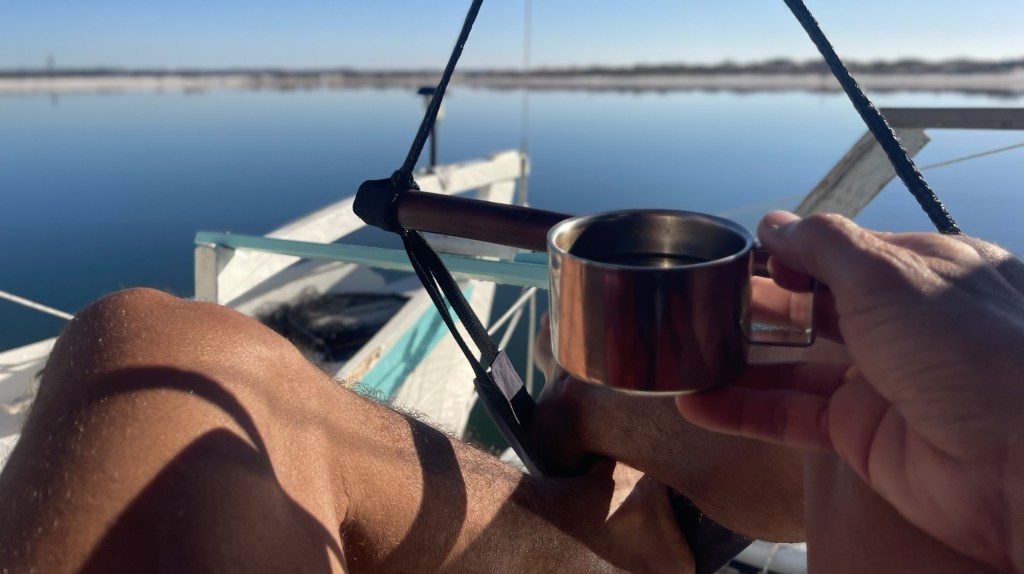
You feel you’re the only one awake at that quiet moment and the rest of the world still sleeps; “Look at you, getting ahead of the world.” Whether or not that’s true is irrelevant. The triumph lies in beating the day to its feet — drinking my coffee watching the sun rise, and enjoying the warmth of the sun slowly bring the day alive.

Most of us know that feeling of waking late and immediately being rushed. The world has already kicked into gear: everyone is on a mission gathering the requirements for day. You head off to your office or workshop to continue yesterday’s “Gotta get it done.”

In contrast, waking early feels like having private time with time itself — a quiet negotiation where you and the clock agree that, for the moment, you’re not rushed by someone else’s requirements.

The Myth of Morning People

Let’s start with a confession from most so-called “morning people”; I don’t think they actually like mornings. They’ve just learned to accept it with good grace. You do it long enough and eventually convince yourself it’s noble. You say things like, “I love the peace and quiet before the world wakes up,” which is really code for, “There’s no one around to annoy me yet.”

Not Yet

There might be some wisdom there though. Early mornings do have a peculiar texture, a feeling that the air itself is listening. Before the traffic peak hour begins, before the morning news unloads its doom and gloom, there’s a brief stillness that’s ancient and fragile. It’s only during the last one or two hundred years that this morning rush has enveloped nearly all of us.

The light is gentler, as though it knows you’re not quite ready for full disclosure. If you can learn to inhabit that space, even for half an hour, it changes the tone of everything that follows. You begin the day deliberately instead of defensively. That, I think, is what structure really means: not rigidity, but intention.

The Chaos of Unplanned Days

The opposite, of course, is the screw it, “let’s-see-what-happens” approach — which sounds adventurous until you’ve lived through it. Nothing really happens the way you want it to. The trouble with spontaneous days is the world is full of other people’s plans.

Unplanned

A day without structure is like an untied shoelace — a small inconvenience that can trip you up at the worst possible moment. From one distraction to another, text messages, checking weather forecasts, minor tasks suddenly feel urgent, unintended doom scrolling. By the end of day, you’re totally knackered, but you can’t quite point to what you’ve achieved. It’s not laziness — it’s diffusion. Your energy, unshaped, simply evaporates.

Structure as an Act of Rebellion

Structure may feel like a constraint, but in truth, it may be a quiet rebellion. Planning your day doesn’t portray control-freak tendencies; it shows self-respect. It’s saying, “Before the world defines me, I’ll decide for myself what I’ll do.”

Think of it as a circle around your life. Inside that circle are the important things: the tasks that align with your values, the moments that make you feel alive. Outside the circle is the cluttered noise beyond your control.

The Ritual of Beginning

Waking each day requires ritual. Some take a cold shower. Some go for a run. Some sit silently with a cup of coffee, staring into the middle distance like a monk with a caffeine habit. The ritual itself doesn’t matter; what matters is that it belongs entirely to you.

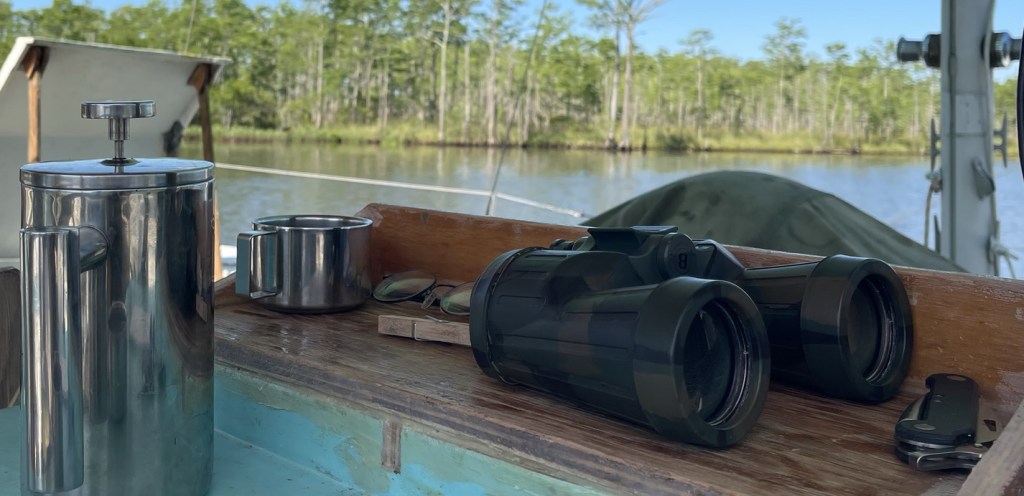
Mine involves the slow, almost ceremonial act of making coffee — measure out the ground beans, boiling the water, mixing in the pot to ensure enough Crema. It’s an absurdly small thing, but that’s the point. Mornings are built for small things. The world can throw plenty of large ones at you soon enough.

There’s something grounding in these tiny, repeated gestures. Control begins with the simplest of acts: waking with comfort, making the bed, choosing not to check your phone before you’ve really woken up. The day will unfold in any number of ways, but you can choose how you’ll meet it.

Planning as a Conversation with Yourself

Filling every hour isn’t necessarily the best plan. It’s about clarity — what deserves your energy, and how much, and what doesn’t. I think statements of intentions can be more effective than plans, at least they are for me. I can make lists and plan to do things at specific times, but I can also guarantee that something will go caddywompuss, and I’ll end up frustrated. With intended outcomes, timing tends to take a backseat and intention remains the main focus. That’s my idea of planning.

Some people write their plans in elegant notebooks. Others scrawl them on the backs of envelopes. A few, dangerously confident, keep them all in their heads. However you do it, the act of planning is a quiet conversation with yourself. It’s asking: how will I feel when this day is over?

And that’s not an easy question. It forces honesty. You might realize you’ve been spending your time on things that don’t move you forward, or worse, that move you in circles. But that’s the beauty of early mornings — they forgive easily. You can start over every twenty-four hours.

The Illusion of Productivity

Planning can also become a performance with clipboard energy, and color-coded calendars, it confuses busyness with purpose. Treating life like a game of Tetris, fitting tasks into every available slot.

There are those who proudly declare, “I’ve been so busy,” as though it’s a moral virtue. However, there is a difference between being busy and being effective. In a well-planned day, you’ve got space to breathe. You can measure its success by how much you’ve enjoyed the day as well as how much you’ve achieved.

For me a well planned day has buffer zones — pockets of unscheduled time where you can simply exist – otherwise you risk becoming simply the administrative assistant of your own life.

When Plans Go Wrong (and They Will)

Even the most carefully created plans can’t predict the weather. Sometimes, despite your best intentions, the day goes pear shaped. Traffic issues, lost keys or wallet, unexpected phone calls — small ambushes can derail a day’s productivity no matter how careful you are.

Treat these not as failures of planning but as reminders of proportion. Plans are scaffolding, not prisons. They’re meant to support you, not contain you. When things unravel — and they will — the structure you built gives you something to fall back on. It’s easier to recover balance when you’ve started the day with intention, not volume.

Plan; But Be Flexible

That’s why planning and flexibility aren’t opposites. They’re dance partners. One provides rhythm; the other allows for improvisation.

The Moral Geometry of Mornings

There’s something almost sacred, about those first hours of the day. The choices made in those early hours seem to echo louder than those made later. Get up early, and enjoy the stillness, the light, and that faint sense that you’ve joined some secret society of the early risers. Lay in bed and squander it, and the day feels slightly off, like you’ve arrived at a play halfway through the second act.

Perhaps that’s why so many traditions treat dawn as a time for reflection or prayer. The world renews itself daily; so can we. Planning in the morning isn’t just about logistics — it’s about alignment. Calibrating your inner compass before the magnetic chaos of the day pulls it askew.

The Small Victories

The rewards of an early, structured start are subtle. They rarely show up on spreadsheets or social media feeds. Instead, they reveal themselves in quieter ways: the ease with which you handle a problem, the patience you have with a stranger, the sense that you’re living with time rather than against it.

Have Clear Intentions

When you get up early, you can feel less reactive, more deliberate. The day feels longer, not because you’ve added hours, but because you’ve claimed them.

Evenings become gentler too. You end the day with a clearer sense of where it went, instead of wondering who stole it.

The Comedy of Trying

Of course, it’s not always easy, it takes effort, and effort without coffee for me is a nightmare. Some mornings I’ll wake late, groggy and confused, carefully created intentions will just sit there, taunting me. My coffee will not be quite right, and I can’t quite get into gear. I promise myself to do better tomorrow — and that, really, is the point I suppose.

The pursuit of structure is a comedy of errors, it’s a daily act of optimism. We keep trying, not because we expect perfection, but because life feels slightly more coherent when we do.

Besides, drifting through unplanned days, constantly frustrated from lack of direction — is far less amusing.

The Secret Payoff

The more you practice waking early and planning your day, the less it feels like discipline and more like liberation. You realize that structure isn’t the enemy of freedom; it’s the foundation of it.

Don’t Color Between The Lines

Musicians practice scales so they can later improvise. The painter sketches outlines so color can flow freely. Likewise, we plan our days not to restrict life’s spontaneity but to make space for it. When the essentials are taken care of, and work is prioritized, portions of the day open like a field to play in. You can wander without guilt because you’ve earned it.

A Closing Thought at Dawn

Some mornings I sit up on deck, coffee in hand, watching the light arrive. It arrives quietly, like a guest who doesn’t want to wake anyone. Birds begin chattering in the trees, the water is boiling with bait fish feeding and soon the dolphins come through to terrorize those bait fish, the air stinky with their fish breath.

In those moments, planning the day feels less like strategy and more like gratitude. Alone in that moment, time feels like a gift, no real distractions yet.

So priorities get laid out: what you’ll work on, what can be ignored, what small joy you’ll make time for. You don’t need to conquer the world — just steer your little boat through rough weather with grace.

Make adjustments

And when the day inevitably veers off course — when plans go sideways and coffee spills or wine runs out, and projects don’t go as hoped — you’ll still have that quiet morning hour to anchor you. You’ll remember that control isn’t about bending life to your will. It’s about meeting it with intention, humor, and enough structure to maintain course when the wind shifts.

In a chaotic world, I think that’s as close to mastery as anyone gets.

Categories: Journey Skills | Leave a comment

Website Powered by WordPress.com.