
There’s a specific kind of silence that drifts over a Wharram just before the cool change of season.

It’s not just the temperature of the air or water—those are easy enough to identify. I find a silence that’s… something else, something subtle. It’s a pause. A breath. A moment where the world seems to lean in, as if it’s waiting for whatever comes next.
I’ve lived aboard for nearly two years now. What’s become apparent is the recognition of change. In the same way you recognize the creaks of the hulls or the gentle rumble of the kettle coming to a boil. I feel the world shifting, and my little floating life is about to shift with it.
The thing about seasons is that they don’t just happen outside of you. They happen within you. And living on a Wharram—a boat that invites a deep kind of intimacy with weather, time, and the many moods of our aquatic world —you feel these shifts in more ways than one.
The First Signs Arrive Quietly
It’s rarely the big, dramatic signs that tell you the season is turning. The signs arrive in very subtle ways.
For example when summer is approaching its end.

One morning, you wake up and realize the deck feels cooler under your bare feet. Not cold. Not even chilly. Just… cooler. The morning sun doesn’t arrive with the intense heat of mid summer anymore. The daily arrival point of “it’s too damned hot” happens a little later each week.
It also begins to show at sunset. No longer is the last couple of daylight hours filled with the intense blowtorch heat from both the sun and its reflection from the water. You can now sit, in the shade, without sweating like a dripping sponge.
The world is changing.
So are you.
Living Close to the Vagaries of the Season
For me, living on a Wharram means living at the mercy—and delight—of the small details of the natural world. There’s no central heating . No thick insulation slowing the transfer of heat.
A Wharram is an honest boat. Admirably so.
When the season shifts, the boat tells you long before your calendar does.
The lashings seem to change their tension depending on humidity, allowing the beams to sometimes creak in their sockets when the boat gets rocked by waves. The morning air slips over the bows with a different character you can’t hide from. I’m exposed to it just from making my morning coffee, it’s in the other hull with an open deck in between.
And you become an involuntary weather-watcher.
Most people have to step outside to feel the season. You simply wake up and feel it immediately—in the boards under you, the air inside the cabin, the way your pillow holds warmth or releases it instantly.
There is nowhere to hide from seasonal change aboard a Wharram.

But that is precisely what makes it beautiful.
Seasonal Shifts Bring Inner Shifts
The funny thing about the changing season is that it always seems to come hand-in-hand with a quiet internal rearranging. Every new season invites a different version of you to step forward.
Maybe that version is more contemplative.
Maybe more adventurous.
Maybe a little tired and ready for rest.
Maybe itching to do a refit, finish repairs, or start those improvements you swore you’d get to when “things slowed down.” Not that they ever really sped up on a Wharram.

Living on a Wharram makes this inner-shift especially unavoidable. The boat’s openness invites self-awareness of a rare kind. The elements aren’t out there. They’re right here, drifting through the living space, humming in the rigging, tapping lightly at the hulls and cabin tops.
A new season arrives, and you feel you’re being nudged toward something. A different rhythm. A bolder mindset. Or simply the kind of small internal maintenance that humans need just as much as boats do.
We don’t often talk about spiritual oil changes, but maybe we should.
The Rituals of Transition
The strange thing about seasonal transitions aboard, especially leaving summer, is that they always initiate a kind of domestic dance—small rituals that prepare you, your boat, and your mind for what’s coming.
You might have:
Another blanket or two that now lives permanently on the bed
The small heater to ward off the morning chill is out of storage
The hatch above the bed doesn’t open quite as early in the morning
Put away the fans and pretend you’re not a little sad to see them go
Consider where you stashed the cold weather gear months ago
These rituals are the liveaboard’s version of migrating geese—or squirrels storing nuts, only you’re pulling sweaters or repositioning your cold foul-weather jacket so you don’t find yourself hunting for it at exactly the wrong moment.

There’s a quiet satisfaction in these small preparations. They aren’t exactly chores; they’re acknowledgments. Telling yourself, I see what’s coming. I’m ready in my own small way, at least I think I am.
And maybe that’s what seasonal transitions are all about—becoming ready for something you can’t quite articulate yet.
The Emotional Weather Report
If I were to file a personal weather report during this seasonal change aboard, it might read:
“Growing swells of introspection, increasing probability of mild restlessness, warm pockets of nostalgia, and scattered clarity across the afternoon. Winds variable, blowing toward future possibilities.”
Seasonal anticipation for me rides its own kind of emotional tide. I’m not necessarily sad, nor necessarily excited, but suspended in that productive in-between space where reflection becomes easier and clarity tends to drift in and out unexpectedly.
This is why the changing season often brings questions I haven’t thought about in months:
Should I reorganize the cabin?
Should I write more?
Should I finally fix that one squeak that I only hear at 3 a.m.?
Am I moving in the direction I want, both literally and metaphorically?
What do I truly want out of the next few, colder, months?

I dream of warm tropical beach’s right alongside dreaming of the unbelievable beauty of cold northern places like Nova Scotia.
These questions drift in the same way clouds drift across the sky—sometimes fast, sometimes slow, sometimes gathering in meaningful formations. And living aboard means you have the time and space to actually notice them.
Life ashore often moves too quickly for these thoughts to gather traction. Aboard, they drift in and out naturally like the tides.
Letting Go of One Season Before Entering Another
One of the quiet truths of living on a boat is that you’re always letting go of something.
Sometimes it’s literal—objects that don’t fit the space or get used enough, clothes that don’t suit the climate, gear that you finally admit isn’t pulling its weight.

But other times, it’s internal. Outdated worries. Old priorities. Habits that once made sense but don’t anymore
And I think each season asks you to release something different.
Summer asks you to let go of excess—too much clothing, too many indoor activities, the belief that you need walls to feel secure.
Autumn asks you to slow down. There’s no need for constant motion.
Winter asks you to accept the comforting monotony of early nights, warm drinks, and low-key living.
Spring demands you let go of dormancy—the temptation to stay comfortable, quiet, unchanging.
Living aboard seems to heighten all of this. There’s no spare space to hoard possessions or old versions of yourself. You become intimately aware of what your “next season self” may not be anymore.
For me this feels healthy, almost instinctive. Just as the Wharram needs to be a minimalist environment, your mind benefits from getting rid of clutter. Just as the boat can be reorganized for the seasonal change, you can reorganize internally.
You let go, because the season asks you to.
The Wharram and the Wider World
One of the unique joys of living on a Wharram is that it gives you a front-row seat to the drama of the natural world, without drowning you in theatrics.
The open decks, the simple nature of the hulls, the flex and give of the rigging—all of it creates an intimacy with the change in seasons. Nature doesn’t shout at you through glass. It whispers through the fibers of the boat itself.
And at the same time, living aboard lets you feel connected to the broader human experience.
People everywhere feel the tug of seasonal change, even if sheltered from it. Even if they ignore it as the heater kicks on or the first frost carpets across their car’s windshield.
While they sit in their climate controlled cars or apartments, you sit on the exposed deck with your morning cup in your hand and the sky wide open above you.

In a way, the experience is universal—you’re just… closer to the source.
The world is changing for everyone. You’re simply noticing it sooner.
The Inner Compass That Turns With the Seasons
Every person has an inner compass—an instinctual direction that shifts ever so slightly as the season does. Not a moral compass, not a navigational one, but a psychological one.
Seasonal changes affect:
What we crave (pumpkin spice vs cookout and beer)
What we’re afraid of (frozen pipes vs A/C breaking down)
What we’re drawn to (a warm fire vs the pool)
What we hope for (good skiing conditions vs good surf)
How we want to spend our time (hunkered inside vs lounging in the sun)
Aboard your Wharram, you might suddenly feel the urge to tidy the deck, or work on a project, or write longer pieces, or plan new voyages, or simply sit in the cockpit and breathe. I tend to do that far too often.

Meanwhile, someone living a thousand miles inland may feel the same urge in a different form—cleaning a closet, rearranging the house, rethinking a career, or letting go of a long-held worry.
The season turns, and hopefully, all of us turn with it.
The Pause Before the Shift
Always, before the new season arrives fully, there’s a pause. A moment when life seems to hover—neither here nor there. A kind of liminality.
This moment is an invitation.
Take stock.
You don’t have to rush.
Something new is coming, meet it at your own pace.
This is the perfect time for reflection aboard a Wharram. For sitting on the trampoline with the sun warming your face. For watching birds and dolphins chasing their meals. For listening to wavelets break on nearby shores.
These small details carry the weight of the season’s approach.
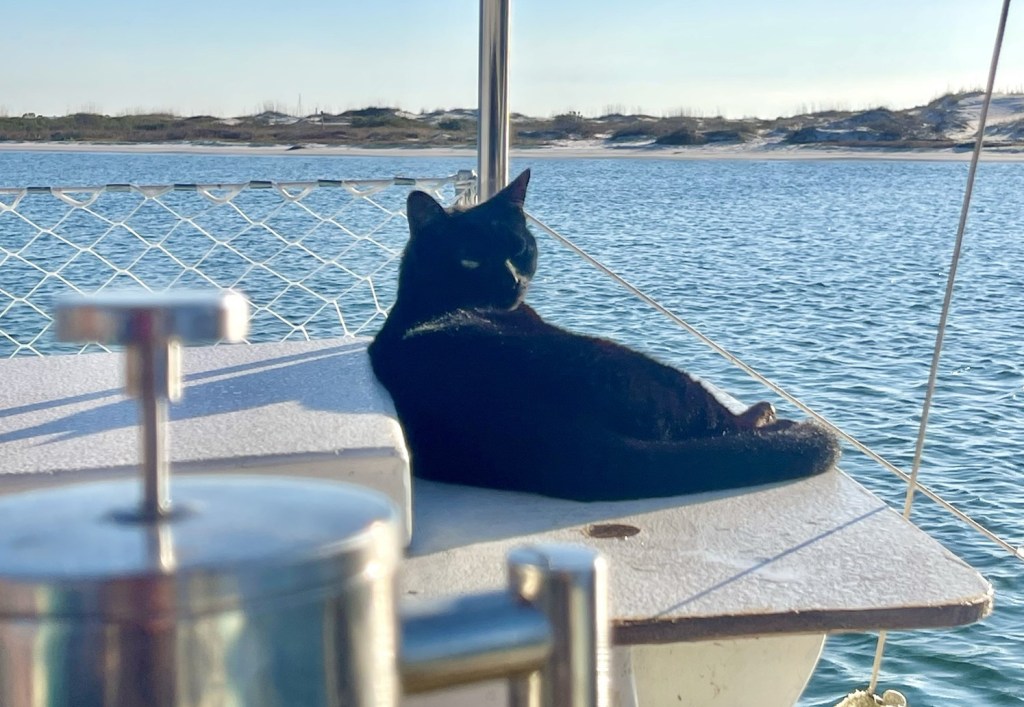
Life is shifting.
You’re shifting with it.
And the boat is holding you through the transition, just as it has held through all the others.
Stepping Into the New Season
When the new season finally arrives—not all at once, but slowly, with thousands of subtle signals—it feels like the world is exhaling. The air steadies. The world adjusts. You adjust with it.
Maybe you feel a new burst of energy.
Maybe you feel a need for calm.
Maybe you feel ready to create, to rebuild, to explore, to retreat, or to begin again.
None of these reactions are wrong.
Seasonal change isn’t a command; it’s a gentle invitation. The kind that says:
You can shift now, if you’d like. You can move in any new direction you please. You can release something. Or start something. Or simply notice what’s different and let that be enough.

You are part of the cycle as surely as the tides.
And with the cooler season just around the corner.
So are the changes.









 Journey Island Style